
Former US envoys who worked on Iran policy say the recent conflict has changed Tehran’s position in ways that could make future nuclear talks more difficult.
According to two senior negotiators involved in the 2015 Joint Comprehensive Plan of Action, the US-Israeli attack on Iran and Iran’s subsequent closure of the Strait of Hormuz have given Tehran new tools and a renewed determination to resist pressure to scale back its nuclear programme.
The agreement, known as the JCPOA, was negotiated under Barack Obama and aimed to limit Iran’s uranium enrichment in exchange for sanctions relief. The former envoys argued that developments during the war have altered the strategic balance by showing Iran how disruption in the Strait of Hormuz can be used to counter a stronger adversary.
One of the negotiators said the chokepoint offers Iran a way to “balance the asymmetry of power” with the United States. The comments reflect a broader concern among former officials that military confrontation may have reinforced rather than weakened Tehran’s willingness to resist external demands on its nuclear programme.
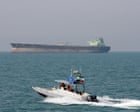
The Strait of Hormuz is one of the world’s most important energy routes, and any disruption there has immediate economic consequences. By closing it, Iran demonstrated that it can impose costs beyond the battlefield, increasing its leverage in any future standoff over nuclear limits.
The former envoys’ remarks come as the Middle East remains in crisis and as international attention continues to focus on the consequences of the latest escalation. Their assessment suggests that the war may have created a more complicated environment for diplomacy, with Iran now able to point to a concrete means of pressure in response to military threats.
For the negotiators who helped shape the 2015 nuclear accord, the concern is not only that Iran will continue to resist restraints on enrichment, but that it may now feel more confident doing so. In their view, the attack and the closure of the strait have handed Tehran a form of leverage it did not previously have in the same way.
The result, they suggest, is a harder path for any renewed attempt to limit Iran’s nuclear activity through negotiation. Rather than weakening Iran’s position, the conflict may have shown it how to turn a strategic vulnerability into a bargaining tool.
The former officials did not suggest that diplomacy is impossible, but their warning is clear: the war has changed the calculus. Iran has seen that control over the Strait of Hormuz can be used as an economic chokehold, and that knowledge may shape how it approaches any future talks over its nuclear programme.

