
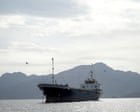
Ships hit by US sanctions have continued to pass through the Strait of Hormuz, underscoring the scale of disruption unfolding around the Iran war and the wider confrontation in the region. The movement came as the Trump administration began a naval blockade of Iranian ports after a deadline passed.
At the same time, diplomatic efforts were shifting to Europe. Emmanuel Macron and Keir Starmer are due to co-host a summit in Paris on Friday, where France and the UK will chair talks as governments look for a way to contain the crisis.
South Korea warns of prolonged economic strain
In Seoul, South Korean president Lee Jae Myung said the worsening tensions around the Strait of Hormuz made it difficult to feel optimistic about the consequences of the war. He warned that high oil prices and pressure on supply chains were likely to continue for some time.
Speaking at a cabinet meeting on Tuesday, Lee said the government should assume that disruption in global energy and raw materials markets would last and strengthen its emergency response system accordingly.
He added that difficulties in global energy and raw materials supply chains, together with high oil prices, would continue for the time being. Lee said South Korea should prioritise alternative supply chains, medium- to long-term industrial restructuring, and the transition to a post-plastic economy as national strategic projects.
Talks involving Lebanon and Israel draw attention
The diplomatic picture is also complicated by the fact that Lebanon and Israel have been in conflict in some form since the early 1980s. The two countries do not have diplomatic relations, and Lebanon does not allow entry to people carrying an Israeli stamp in their passport.
Against that background, the fact that direct talks are taking place between the two governments has been described as striking. The unusual nature of those discussions has added to international interest in the broader crisis and the possible political consequences of the fighting.
With military escalation continuing at sea and diplomatic talks taking shape on land, the situation around the Strait of Hormuz remains highly volatile. Governments across the region and beyond are preparing for the possibility that the effects on energy markets and supply chains will deepen further before any relief appears.
Friday’s Paris summit is now expected to be a key test of whether European powers can help shape a response, even as sanctions, blockades and regional tensions continue to move the crisis into new territory.

