
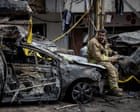
Israel and Hezbollah continued to exchange strikes on Friday as the fragile calm around the wider Iran war came under growing strain. The latest round of violence coincided with remarks from Donald Trump, who told US media that he had asked Benjamin Netanyahu to be more “low-key” in Lebanon.
Trump also cast doubt on the durability of the ceasefire, pointing to the continued closure of the Strait of Hormuz as a sign that tensions remain unresolved. The strait, a critical waterway for global shipping, has become one of the central pressure points in the conflict.
At the same time, Netanyahu said there is no ceasefire in Lebanon, underscoring the uncertainty surrounding the situation on the ground. Israel launched fresh strikes as the fighting between Israeli forces and Hezbollah persisted, adding to concerns that the truce arrangement could unravel further.
In Pakistan, the streets of Islamabad were placed under strict lockdown as the capital prepared to host what officials described as historic negotiations between Iran and the US. The talks are being presented as a possible path toward ending a war that has already devastated much of the Middle East.
Pakistani officials have insisted that the make-or-break peace negotiations will go ahead over the weekend as planned, despite the increasingly fragile political and military backdrop. The talks have been overshadowed by Israel’s continuing bombardment of Lebanon and by disputes over the terms of the discussions themselves.
The diplomatic effort has raised hopes that the US and Iran may yet be able to stabilise the situation, but those hopes are being tested by events on the ground. The exchange of strikes between Israel and Hezbollah has continued even as negotiators prepare to meet, highlighting the gap between diplomatic plans and military reality.
Trump’s comments added another layer of uncertainty. His reported request that Netanyahu take a lower-profile approach in Lebanon suggests concern in Washington about the pace and visibility of Israel’s military operations while ceasefire efforts remain under way. But with no easing in the fighting, those hopes remain fragile.
The emerging picture is one of a regional crisis still in motion. The ceasefire that had seemed to offer a path away from wider conflict is now under pressure from continuing hostilities, diplomatic disputes, and unresolved questions over key strategic routes such as the Strait of Hormuz.
For now, the focus remains on Islamabad, where the planned Iran-US talks are expected to test whether diplomacy can hold in the face of renewed violence. With Israel and Hezbollah still trading attacks, and with Netanyahu rejecting the idea that Lebanon is under a ceasefire, the weekend negotiations are being treated as a critical moment for the region.
Officials in Pakistan are continuing to press ahead with preparations, despite the tense atmosphere. The question is whether the talks can produce any movement toward a settlement, or whether they will be overtaken by the escalating conflict around them.

