
If you have ever asked, “What is the perfect social media posting schedule for your business?” you are not alone. It is one of the most common questions business owners, marketers, and content creators ask when they want better results from social media.
The truth is simple: there is no single posting schedule that works for every business. The perfect social media posting schedule depends on your audience, your industry, your goals, your content style, and the platforms you use. What works for a local coffee shop may fail for a software company. What works for an online store may not fit a consulting brand.
Still, that does not mean you should guess. A smart posting schedule can help you increase reach, improve engagement, stay consistent, and turn your social media accounts into real business assets.
In this guide, you will learn how to build the right social media posting schedule for your business, how often to post, when to publish, and how to test your schedule until you find what works best.
Why Your Posting Schedule Matters
Your posting schedule shapes how your audience experiences your brand. If you post too little, people may forget about you. If you post too much, your followers may feel overwhelmed or simply ignore your content.
A strong social media posting schedule helps your business:
- stay visible
- build trust through consistency
- improve engagement rates
- support promotions and campaigns
- drive traffic to your website
- generate leads and sales
Consistency matters more than intensity. Many businesses start strong, post every day for two weeks, then disappear for a month. That creates an uneven brand presence. It is better to post steadily with a realistic plan than to post aggressively and burn out.
Is There Really a Perfect Social Media Posting Schedule?
The perfect social media posting schedule is not a fixed number like “post at 9 AM three times a week.” Instead, it is the schedule that matches your business goals and audience behavior.
For example, your ideal schedule should answer questions like:
- When is my audience most active?
- How often can I post quality content?
- Which platforms matter most for my business?
- Am I trying to grow awareness, get leads, or increase sales?
- Does my audience prefer short videos, carousels, stories, or text posts?
The best posting schedule is the one you can maintain while still producing useful, relevant, high quality content.
Start With Your Business Goals
Before choosing a posting frequency, define what you want social media to do for your business.
1. Brand awareness
If your goal is visibility, you may need to post more often so more people see your content over time.
2. Engagement
If your goal is conversation, comments, shares, and saves, focus on thoughtful content and active community management.
3. Traffic
If you want website visits, your schedule should include content that naturally leads people to blog posts, landing pages, or product pages.
4. Leads and sales
If conversions matter most, your posting schedule should include educational content, trust-building content, and timely offers.
When your goal is clear, your posting schedule becomes easier to design.
How Often Should a Business Post on Social Media?
There is no universal rule, but a practical starting point is to post often enough to stay active without lowering content quality.
Here is a simple benchmark many businesses can start with:
3 to 5 posts per week is often a manageable schedule for most businesses. This gives you room to share updates, offers, tips, and community-focused content.
4 to 7 posts per week works well for many brands, especially when combined with Stories. If video performs well for your audience, mix in Reels regularly.
X or Twitter
Because the feed moves fast, businesses often post more frequently here. Between 1 and 3 posts per day can work, depending on your industry and content resources.
2 to 5 posts per week is a strong starting point for service businesses, consultants, B2B brands, and professional thought leaders.
TikTok
If short video is your focus, 3 to 7 posts per week is a reasonable target. Consistency is especially important when building momentum.
5 to 10 pins per week can help maintain visibility, especially for businesses with visual, searchable, or evergreen content.
These numbers are not strict rules. They are starting points. A small business with limited resources may succeed with fewer posts if the content is strong and consistent.
Quality First, Always
A common mistake is focusing too much on frequency and not enough on value. Posting five weak pieces of content is rarely better than posting two great ones.
Ask yourself:
- Does this post help, educate, entertain, or inspire?
- Is it relevant to my audience?
- Does it reflect my brand clearly?
- Would I stop scrolling for this?
The perfect posting schedule is not just about how often you post. It is also about whether your content deserves attention.
The Best Time to Post on Social Media
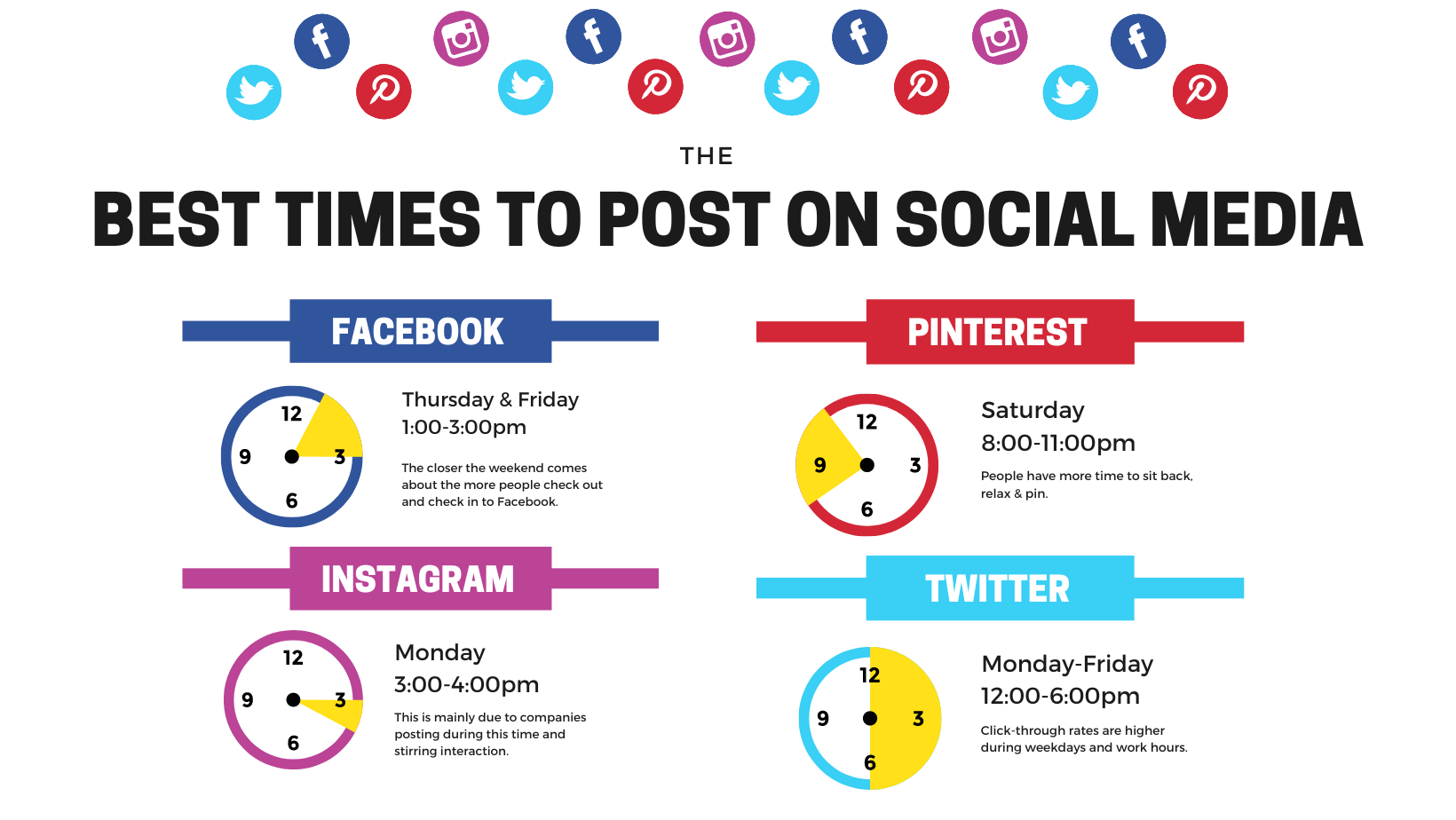
Many people search for the best time to post on social media, hoping for one simple answer. But audience behavior varies by location, industry, age group, and platform.
A business that targets office workers may get stronger results during lunch breaks or after work. A restaurant may perform better in the late afternoon when people start thinking about meals. A parenting brand may see engagement at very different times than a B2B software company.
A useful starting point is to think about when your audience is most likely to be:
- checking their phone in the morning
- taking a break during the day
- browsing after work
- relaxing in the evening
- planning purchases on weekends
Then test your timing. Social media success comes from observing patterns, not blindly following generic advice.
How to Find the Right Posting Schedule for Your Business
1. Know your audience
Study your ideal customer. What is their age, profession, location, lifestyle, and online behavior? When are they likely to be active? What kind of content do they prefer?
A local salon and a national ecommerce store may use the same platforms but need very different schedules.
2. Choose the right platforms
You do not need to be everywhere. Focus on the platforms where your audience already spends time.
If your business is visual, Instagram and TikTok may matter more.
If you are in B2B, LinkedIn may bring stronger results.
If you rely on discovery and evergreen traffic, Pinterest can be valuable.
3. Create a realistic content plan
Choose a schedule your team can sustain. Do not build a plan around daily posting if you only have time to create two strong posts a week.
A realistic plan beats an ambitious plan that collapses after ten days.
4. Use content pillars
Content pillars make scheduling much easier. Instead of inventing new ideas every day, create repeatable themes.
Examples of content pillars include:
- educational tips
- behind the scenes content
- customer stories
- product highlights
- FAQs
- industry insights
- promotions and offers
With content pillars, your social media calendar becomes more organized and less stressful.
5. Track performance
Your first posting schedule is only a test. Watch your analytics closely.
Review:
- reach
- impressions
- comments
- shares
- saves
- click-through rate
- follower growth
- leads or conversions
After a few weeks, you will start noticing patterns. Some days perform better. Some formats work better. Some times attract more engagement. That is how you shape a smarter schedule.
A Simple Example of a Weekly Social Media Posting Schedule
Here is a sample schedule for a small business:
Monday: Educational tip or industry insight
Tuesday: Product or service feature
Wednesday: Customer review or testimonial
Thursday: Behind the scenes post
Friday: Promotional post or special offer
Saturday: Short video, story, or community-focused content
Sunday: Light post, recap, or planning content
This structure helps you stay balanced. You are not selling every day. You are building trust while still supporting business goals.
Common Mistakes Businesses Make
Posting without a strategy
Random posting leads to random results. Every post should support a goal.
Copying another brand’s schedule
Just because a competitor posts twice a day does not mean you should. Their audience, team, and content budget may be completely different.
Ignoring analytics
Data matters. If your audience engages more on Wednesday evenings than Monday mornings, your schedule should reflect that.
Posting too much promotional content
People do not follow brands just to see sales messages all day. A healthy mix of value and promotion is essential.
Being inconsistent
Long gaps between posts can hurt momentum and visibility. A smaller consistent schedule is better than irregular bursts of activity.
How Long Should You Test a Posting Schedule?
Give your schedule enough time to produce useful data. In most cases, testing for 30 to 60 days is a good starting point. That gives you time to compare days, formats, and times without changing things too quickly.
During this testing period, keep these variables as stable as possible:
- posting frequency
- content themes
- posting times
- platforms used
Once you have enough data, make small adjustments. Do not change everything at once. If you adjust too many variables together, it becomes harder to see what actually improved results.
Does Every Business Need to Post Every Day?
No. Daily posting is not required for every business.
Some brands grow very well with three strong posts a week. Others benefit from daily activity because their audience expects constant updates. The better question is not “Should I post every day?” but “Can I post consistently without lowering quality?”
If daily posting leads to rushed content, weak ideas, and burnout, it is not the right schedule for your business.
The Real Secret to the Perfect Posting Schedule
The real secret is balance.
You need a schedule that balances:
- consistency and creativity
- frequency and quality
- business goals and audience value
- planning and flexibility
The perfect social media posting schedule is not something you find once and keep forever. It changes as your business grows, your audience shifts, and platforms evolve.
What works today may need adjustment three months from now. That is normal. Strong businesses treat social media as an ongoing process of testing, learning, and improving.
Final Thoughts
So, what is the perfect social media posting schedule for your business?
It is the schedule that fits your audience, supports your goals, and allows you to publish high quality content consistently. There is no one-size-fits-all formula. The best schedule is built through planning, observation, and steady refinement.
Start simple. Choose the right platforms. Post consistently. Watch your analytics. Improve over time.
If your business can create valuable content and publish it on a realistic schedule, you are already ahead of many competitors.
In the end, the perfect social media posting schedule is not about posting the most. It is about posting with purpose.
FAQs
What is the best social media posting schedule for a small business?
A good starting point is 3 to 5 posts per week on one or two main platforms. From there, adjust based on audience engagement and business goals.
How often should businesses post on Instagram?
Many businesses do well with 4 to 7 posts per week, especially when combining feed posts with Stories and short videos.
Is it better to post every day on social media?
Not always. Daily posting only works if you can maintain quality and consistency. For many businesses, fewer high quality posts perform better.
How do I know the best time to post for my audience?
Use your platform analytics, test different times, and track engagement patterns over several weeks.
Can one schedule work for all social media platforms?
No. Each platform has different user behavior, content styles, and expectations. Your posting schedule should be tailored to each platform.

