
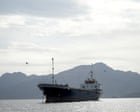
US-sanctioned ships have continued to pass through the Strait of Hormuz even as Washington’s naval blockade of Iranian ports takes effect after a deadline passed, underscoring the widening fallout from the Iran war and the disruption now spreading across global trade routes.
At the same time, French president Emmanuel Macron and UK prime minister Keir Starmer are due to co-host a summit in Paris on Friday, where diplomats are expected to continue talks shaped by the fast-moving crisis in the region.
The latest developments come as South Korean president Lee Jae Myung warned that the tensions around the Strait of Hormuz make it difficult to feel optimistic about the consequences of the conflict. Speaking at a cabinet meeting on Tuesday, Lee said high oil prices and strain on supply chains are likely to persist.
South Korea warns of prolonged disruption
Lee said the government should assume that disruption in global energy and raw materials markets will continue and should strengthen its emergency response system.
“For the time being, difficulties in global energy and raw materials supply chains and high oil prices will continue … I ask that we pursue the development of alternative supply chains, medium- to long-term industrial restructuring, and the transition to a post-plastic economy as top-priority national strategic projects.”
The remarks reflect growing concern among countries dependent on imported energy and raw materials, particularly as the situation around the Strait of Hormuz threatens to push costs higher and further complicate shipping routes.
Talks between Lebanon and Israel draw attention
Elsewhere in the crisis, attention is also focused on talks involving Lebanon and Israel. The two countries have been at war in some form since the early 1980s, and they do not have diplomatic relations. Lebanon also does not allow entry to anyone with an Israeli stamp in their passport.
That is why the fact that direct talks are taking place between the two governments has drawn such attention. As noted in the source report, the discussions are being described as astonishing given the long history of hostility and the absence of formal relations.
The combination of military escalation, shipping disruption and diplomatic movement has made the crisis unusually complex. With sanctioned vessels still moving through one of the world’s most important waterways, oil markets and trade routes remain under pressure while governments prepare for more emergency coordination in the days ahead.
The Paris summit on Friday is expected to be part of that broader response, as European leaders seek to keep diplomatic channels open while the conflict continues to reverberate far beyond the region.

