
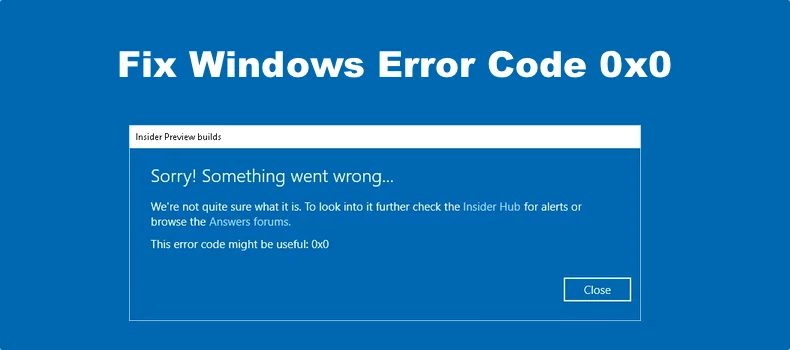
If you have seen the 0x0 0x0 Windows error, you are probably looking for one clear answer. Unfortunately, this is one of those Windows problems that feels vague from the start. The code is commonly described online as a generic Windows error, meaning it does not always point to one specific cause. Instead, it usually appears when Windows fails to complete an action correctly, such as opening a file, running a program, or handling a system process.
That is exactly why this error frustrates so many users. It looks technical, but by itself it does not tell you whether the real issue is a damaged system file, a bad driver, a broken update, or a software conflict. The good news is that the most reliable fixes are already built into Windows, and Microsoft provides official tools for several of them.
In this guide, you will learn what the 0x0 0x0 Windows error means, what usually causes it, how to fix it step by step, and how to reduce the chance of seeing it again. If you want a practical troubleshooting article that is easy to follow, this is the place to start.
What Is the 0x0 0x0 Windows Error?
The phrase 0x0 0x0 Windows error is widely used on troubleshooting sites, but it is best understood as a broad or generic error label, not a precise Microsoft diagnosis for one single problem. Several guides describe it as a condition where Windows cannot complete an operation properly, often because something deeper in the system is broken or conflicting.
In practical terms, this means the error can show up in different situations. Some users notice it when launching an app. Others see it after a Windows update, during system startup, or when a process in the background fails. Because the code is so broad, troubleshooting usually works best when you focus on the most common system-level causes first.
Common Causes of the 0x0 0x0 Windows Error
One common cause is corrupted or missing system files. Microsoft recommends using DISM and SFC when Windows features stop working properly, when the system freezes, or when corruption is suspected. Since generic error codes often appear when important Windows components are damaged, system file corruption is one of the first things worth checking.
Another possible cause is a problematic Windows update. Microsoft’s own support pages explain how to uninstall updates when a PC starts behaving badly after a recent update. Many troubleshooting guides for 0x0 0x0 specifically mention rolling back a recent update if the error started immediately afterward.
A third likely cause is an outdated or faulty driver. Microsoft provides official instructions for updating drivers through Device Manager and Windows Update, and third-party troubleshooting guides list bad or outdated drivers among the common reasons this error appears. Hardware drivers that fail to communicate properly with Windows can trigger all kinds of vague system errors.
The error can also be connected to software conflicts, especially if several startup items or background services are running together. Microsoft’s clean boot guide exists specifically to help isolate services or apps that interfere with normal Windows behavior. That makes clean boot one of the most useful troubleshooting methods for this type of error.
How to Fix the 0x0 0x0 Windows Error
1. Restart Your PC First
This sounds basic, but it is still worth doing. A restart clears temporary background states and can remove a one-time software conflict. Generic Windows errors sometimes disappear after a clean restart, especially if the problem was tied to a stuck process rather than permanent corruption. This is a simple first step before moving into deeper repairs.
2. Run DISM and SFC to Repair Windows Files
This is one of the most important fixes. Microsoft recommends running DISM first and then System File Checker to repair missing or corrupted system files. These tools are built into Windows and are often the safest first real repair step when the system is unstable.
Open Command Prompt as Administrator, then run:
DISM.exe /Online /Cleanup-image /Restorehealth
After that completes, run:
sfc /scannow
Microsoft explains that DISM can restore the files needed to repair Windows, and SFC then checks and replaces corrupted protected system files. If the 0x0 0x0 Windows error is being caused by damaged Windows components, this step can often fix it.
3. Check for Driver Problems
If the issue appears after connecting hardware, installing software, or noticing device problems, check your drivers next. Microsoft says you can update drivers from Device Manager by right-clicking the relevant device and choosing Update driver. Windows Update can also deliver driver updates in some cases.
This matters because a broken graphics, storage, network, or chipset driver can trigger unstable behavior that ends up showing as a vague error instead of a clearly named hardware warning. If you recently installed a driver manually, it is worth reviewing that device first.
4. Uninstall a Recent Windows Update
If the error started shortly after Patch Tuesday or after a major Windows change, a recent update may be the trigger. Microsoft’s official process is straightforward: go to Start > Settings > Windows Update > Update history > Uninstall updates, then remove the update you suspect is causing the issue.
This does not mean Windows updates are bad in general. It simply means that a specific update can occasionally introduce compatibility issues on some PCs. If your device was stable before the update and unstable immediately after it, rollback is a sensible test.
5. Perform a Clean Boot
A clean boot helps you figure out whether the error is being caused by third-party services or startup apps. Microsoft explains that this method starts Windows with a minimal set of drivers and startup programs, making it easier to isolate software conflicts.
To do it, type msconfig in Search, open System Configuration, go to the Services tab, hide Microsoft services, and disable the non-Microsoft ones. Then review your startup items through Task Manager and disable them temporarily. If the error disappears after restarting in this state, a background app or service is likely responsible.
6. Remove Recently Installed Apps
If the problem began after installing a new tool, utility, optimizer, antivirus program, or system tweaker, remove that app and test again. Microsoft explains that apps can be uninstalled from Start > Settings > Apps > Installed apps.
This step is especially relevant for utilities that modify startup behavior, drivers, registry entries, or system performance settings. Even if an app seems unrelated, low-level software can interfere with Windows in ways that create broad error symptoms.
7. Use System Restore If the Error Appeared Recently
If your PC used to work properly a few days ago and you suspect a recent change caused the issue, System Restore may help. Microsoft says you can open it from Control Panel > Recovery > Open System Restore or by running rstrui.exe. This can return system files and settings to an earlier point without acting like a full reinstall.
System Restore is especially useful when you are not sure whether the trigger was a driver, software install, or system configuration change. It gives you a way to roll back the environment to a known working state.
8. Reset Windows as a Last Resort
If none of the other fixes work, Microsoft’s recovery options include Reset this PC. Microsoft explains that reset reinstalls Windows and gives you the option to keep or remove your personal files, though apps and settings are reset. This is a stronger fix for deeper system corruption.
This should usually be the last major step, not the first. Back up important data before doing it. If the 0x0 0x0 Windows error is tied to severe OS damage, reset can often bring the system back to a clean working state.
How to Prevent the 0x0 0x0 Windows Error in the Future
The best prevention strategy is to keep Windows stable rather than chase the code after it appears. Start by installing updates carefully and paying attention after major system changes. If your PC starts acting strangely right after an update, driver installation, or new software install, deal with it early before the issue grows into a broader error. Microsoft provides official paths for updating drivers, uninstalling updates, and removing apps, so use those first instead of random third-party tools.
It also helps to avoid aggressive “PC cleaner” or “registry repair” utilities unless you fully trust them. The most dependable repair tools for Windows problems are usually the built-in Microsoft tools like DISM, SFC, System Restore, and Recovery options. These are designed for system repair and are much less risky than blindly editing the registry or installing unknown fixers.
Creating restore points, backing up important files, and keeping drivers reasonably current are also smart habits. Even if these steps do not prevent every error, they make recovery much easier and reduce the damage when something goes wrong.
Final Thoughts
The 0x0 0x0 Windows error is frustrating because it is not a sharply defined Windows message. It usually points to a broader system issue rather than a single simple cause. Most commonly, that means damaged system files, a bad update, a driver issue, or a software conflict.
The most effective approach is to troubleshoot in order: restart, run DISM and SFC, check drivers, remove recent updates or apps, try a clean boot, use System Restore, and then consider Reset this PC only if needed. These are the core fixes most likely to solve the problem without guessing wildly.
If you want one simple takeaway, it is this: treat 0x0 0x0 as a symptom, not the root cause. Once you focus on the underlying Windows issue, the path to a real fix becomes much clearer.
FAQs About the 0x0 0x0 Windows Error
Is 0x0 0x0 an official Microsoft error name?
Not exactly. It is commonly used online as a generic Windows error label, but Microsoft’s official support guidance focuses more on the underlying repair methods like DISM, SFC, clean boot, recovery, and update removal rather than on this specific phrase as a unique standalone error family.
What is the fastest fix to try first?
After restarting, the best first repair step is usually running DISM and SFC from an elevated Command Prompt, because Microsoft specifically recommends them for repairing corrupted Windows files and components.
Can a Windows update cause the 0x0 0x0 error?
Yes, that is one of the commonly reported triggers. Microsoft provides official steps to uninstall updates when a PC starts malfunctioning after a recent update.
Can drivers cause this error?
Yes. Faulty or outdated drivers are frequently listed as possible causes, and Microsoft provides official ways to update drivers through Device Manager and Windows Update.
Should I reset Windows immediately?
Usually no. Reset should be one of the later steps after trying system file repair, update rollback, driver checks, clean boot, and restore options. Microsoft includes Reset this PC as a recovery option, but it is stronger than the earlier fixes.

