
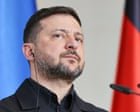
Ukrainian president Volodymyr Zelenskyy has welcomed Péter Magyar’s decisive victory in Hungary, saying he hopes for a “pragmatic” and “friendly” relationship with the country’s new government after years of hostility under what he described as a pro-Russian regime.
The comments came as the political shift in Budapest drew attention across Europe. Zelenskyy framed the result in strongly symbolic terms, calling it “the victory of light over darkness” and presenting it as a break with the previous administration.
In Berlin, Germany’s chancellor Friedrich Merz also commented on the outcome during a press conference with Zelenskyy. Merz said Magyar’s win would have “implications for our support for Ukraine”, linking the political change in Hungary to broader European backing for Kyiv.
Merz said the election result reflected a major public verdict in Hungary. “More Hungarians than ever before cast their votes. By an overwhelming majority, they voted not only to oust a government, but to oust an entire system,” he said.
The German chancellor also said he and Zelenskyy discussed the need for military assistance to Ukraine to move quickly. “Volodymyr Zelenskyy and I also discussed this. The funds for military support must now be disbursed quickly. Ukraine needs them urgently,” Merz said.
The remarks underline how closely the Hungarian result is being watched by European leaders, particularly in the context of support for Ukraine. Magyar’s victory marks a sharp political change after a period in which Hungary’s government was seen by critics as aligned with Moscow.
Zelenskyy’s comments suggest that Kyiv is looking for a reset in relations with Budapest. His reference to a “pragmatic” and “friendly” approach indicates a desire for cooperation, especially as Ukraine continues to seek political and military support from European partners.
The exchange in Berlin also highlighted the role Germany may play in shaping the next phase of support for Ukraine. Merz’s emphasis on the need to release military funds quickly points to the urgency of that backing at a time when Kyiv continues to press for sustained assistance.
Magyar’s victory has therefore resonated well beyond Hungary itself. For Zelenskyy, it offers the prospect of a neighbouring government less hostile to Ukraine. For Merz, it is a development with clear consequences for European policy and the future flow of support to Kyiv.
As the new Hungarian government prepares to take shape, European leaders will be watching closely to see whether the rhetoric of change is matched by policy shifts on Ukraine, the EU, and Hungary’s broader position within the continent’s political landscape.

