
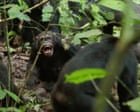
A new study is drawing attention to what researchers say may be the first documented case of a unified chimpanzee community turning on itself in a sustained conflict.
The findings concern the Ngogo chimpanzee group in Uganda’s Kibale National Park, where primatologist Aaron Sandel observed the early signs of trouble on a June day in 2015. At the time, he was quietly watching a small cluster of chimpanzees when he noticed that the animals ahead of him appeared unusually tense as other members of the wider group approached through the forest.
Rather than behaving like companions meeting familiar members of their own community, the chimpanzees showed nervous behaviour. They grimaced and touched one another for reassurance, suggesting that the encounter felt more like a meeting with strangers than with close groupmates.
In retrospect, Sandel said that moment marked the beginning of a prolonged and violent conflict that would unfold over years. What had once been a close-knit chimpanzee group later became divided in a way that researchers describe as resembling a civil war.
The study adds to long-running scientific interest in chimpanzee behaviour and social organization. Chimpanzees are already known for complex alliances, territorial aggression and coordinated group action. But the Ngogo case appears to go further, because the conflict took place within what had been regarded as a unified community rather than between separate neighbouring groups.
Researchers say the episode may offer an unusual window into the social pressures that can drive violence among chimpanzees and into the similarities, and differences, between chimpanzee conflict and human conflict. The new account is notable not only for the scale of the violence described, but also for the way the conflict emerged from within an existing social network.
The observations from Kibale National Park began with a brief but telling moment of unease in June 2015. From there, they developed into a much broader pattern of hostility that continued over time. According to the study, the confrontation involved coordinated attacks between two groups formed from within the same chimpanzee community.
That makes the Ngogo case stand out in primatology. While chimpanzee warfare between different communities has been documented before, the idea of a single community splitting and engaging in organized internal conflict is far less familiar.
For Sandel, the early scene in the forest now appears to have been a warning sign of what was to come. The cautious gestures and anxious reactions he saw among the chimpanzees that day were, in hindsight, the first visible signs of a deeper rupture within the group.
The study’s account underscores how quickly social bonds can change in wild chimpanzee societies, and how closely those changes can be tied to aggression, division and group coordination. It also leaves open questions about what triggers such breakdowns and how they develop once mistrust takes hold.
For now, the Ngogo chimpanzees offer researchers a rare and unsettling example of conflict within a single wild community, recorded over time in one of Africa’s best-known primate research sites.

