
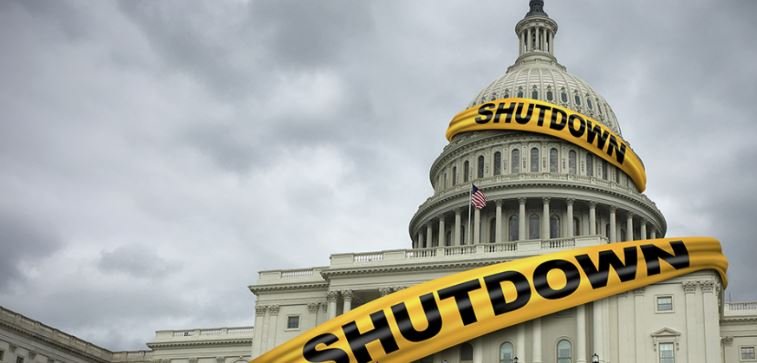
A government shutdown happens when parts of a government that rely on time limited funding do not receive new spending authority by the deadline. In the United States, this is usually a “lapse in appropriations,” meaning Congress has not enacted regular funding bills or a temporary funding measure for certain agencies. When that happens, many federal activities must stop because the law generally prohibits agencies from operating without funding. The U.S. Government Accountability Office explains that during a lapse, the Antideficiency Act generally requires agencies to stop operations because they cannot incur obligations or make payments without an appropriation, including paying employees for work that is not allowed to continue. The phrase “shutdown” can be misleading, because it does not mean everything stops. Some functions continue because they are funded differently, or because they are legally “excepted” to protect life and property. The result is a patchwork: some services stay open, others slow down, and many routine functions pause until funding returns.
The first practical question in a shutdown is: who can legally work? Guidance from the U.S. Office of Personnel Management notes that a shutdown furlough occurs when there is a lapse in annual appropriations, and that agencies must shut down activities funded by annual appropriations that are not excepted by law. The same guidance also points out that some functions have alternative funding sources and are not directly affected by a lapse in annual appropriations, which is one reason shutdown effects vary across agencies and programs. In day to day terms, agencies quickly divide work into categories: excepted work that can continue, work that must pause, and work that can continue only to support the orderly shutdown itself. This sorting process happens fast, often with limited lead time. That is why the first hours of a shutdown can feel chaotic for workers and the public. People may hear that “the government is shut down” while still seeing some offices open, some websites updated, and some payments continuing as normal.
For the public, the biggest question is which services are affected. The short answer is that discretionary programs that rely on annual appropriations are the most likely to be disrupted, while many mandatory benefit programs are generally less affected. The Bipartisan Policy Center summarizes this distinction plainly: shutdowns mainly hit discretionary spending programs that require annual appropriations, while interest on the debt and many mandatory programs such as Social Security and Medicare are generally unaffected. That said, “generally unaffected” does not mean “no impact.” Even when benefits continue, customer service, case processing, or new enrollments can slow if staffing is reduced. A clear example comes from the Social Security Administration, which stated during a February 2026 shutdown notice that benefit payments for Social Security and SSI would continue on time with no change in payment dates. At the same time, in many shutdowns, in person support and some administrative functions can be constrained because they depend on staff who may be furloughed or reassigned.
Timelines matter because shutdown impacts grow with time. Day one is typically about immediate closures, hotlines, and public notices. Within the first week, backlogs begin to build: permits, inspections, regulatory reviews, grant processing, research administration, and many contracting actions can slow or pause. Over multiple weeks, the effects spread outward into the private economy because federal work is connected to travel, trade, health, and business operations. The Congressional Research Service explains that the economic effect depends on scope and duration, including how much funding has lapsed and how many activities are “excepted.” In its review of the 2025 shutdown, CRS described how shutdowns reduce supply because furloughed workers cannot produce government output, and reduce demand because some government purchases cannot be made. Even when back pay is later provided and delayed purchases resume, lost work hours are mostly unrecoverable, which is why shutdowns can have a lasting, though often modest, economic cost.
A practical way to think about “services affected” is to group them into categories. First are safety and protection functions that usually continue: much of law enforcement, border and aviation safety operations, emergency response, and services needed to protect life and property. Second are benefit payments that often continue because they are mandatory spending or funded through permanent authority, though support services may be reduced. Third are routine administrative and public facing services that commonly slow: many office appointments, processing of non urgent paperwork, some inspections, parts of regulatory review, and many grants and contracts that require staff time and active funding. Fourth are data and information releases: shutdowns can delay the publication of official economic statistics and reports, which can make it harder for businesses and households to judge what is happening in the economy. CRS noted that the 2025 shutdown led to delayed release or permanent cancellation of some key economic data, complicating assessment of the shutdown’s effects.
Real world examples help clarify why people experience shutdowns differently. The best known modern examples in the United States include the 2013 shutdown, the 2018 to 2019 partial shutdown, and the 2025 shutdown. CRS documents that the 2025 funding gap began October 1, 2025 and ended November 12, 2025 when a continuing appropriations law was signed, and it resulted in furloughs for federal employees who were not excepted. CRS also notes that the 2025 shutdown lasted six weeks and that the law ending it provided for federal employees to be retroactively paid. The Brookings Institution highlights that official estimates often find much of the lost GDP is recovered after reopening, but some losses remain, and it points to CBO’s estimate that a six week shutdown had a cumulative GDP loss figure that is small relative to the size of the economy. For households, this is why shutdowns can be financially stressful even if long term economic damage appears limited in aggregate: missed or delayed paychecks, delayed approvals, and uncertainty can be very real at the individual level.
What should readers do during a shutdown? For most people, the best approach is to check the specific agency pages related to the service they need, because each agency publishes shutdown contingency updates and service status changes. If you are expecting a benefit payment, look for official confirmation about whether payments continue and whether customer support is operating at full capacity. The SSA example shows how an agency may clearly state that payments continue even while other operations may be affected. If you are waiting on a permit, passport, loan, grant decision, or regulatory approval, assume timelines may slip and plan for delays, especially if the shutdown extends beyond a few days. If you are a business that relies on federal contracting or approvals, focus on cash flow and documentation readiness so you can move quickly when agencies reopen.
What happens next
A shutdown typically ends when Congress passes and the President signs a funding measure, either full year appropriations or a continuing resolution for the affected agencies. After reopening, agencies prioritize restarting core operations, recalling furloughed staff, and reducing backlogs. OPM’s shutdown furlough guidance emphasizes that shutdowns can occur with little lead time and that agencies have to plan how to pause and restart non excepted work. For a news site, the best evergreen practice is to keep a short, dated “current status” module at the top of any shutdown explainer, and update it only with verified, official statements, while leaving the rest of the explainer stable.
FAQ
Does a shutdown mean all federal workers stop working?
No. Some workers are “excepted” to protect life and property, and some functions have alternative funding and are not directly affected by a lapse in annual appropriations.
Do Social Security payments stop during a shutdown?
Often they continue, because they are generally treated as mandatory spending. For example, SSA stated in February 2026 that Social Security and SSI payments would continue on time during a shutdown.
Why do some services slow even if benefits continue?
Payments may have permanent funding, while staffing for customer service or case processing can be constrained if workers are furloughed or reassigned.
How big is the economic impact?
It depends on scope and duration. CRS describes how shutdowns reduce supply and demand during the shutdown, with much of the demand effect reversing later but lost work hours largely unrecoverable.
Is a shutdown the same as a debt default?
No. A shutdown is about funding authority for operations, while a default relates to the government’s ability to meet debt obligations. They are separate issues with different triggers.
Source note and verification note
This explainer relies on official guidance and analysis from GAO on lapses in appropriations and the Antideficiency Act, OPM’s shutdown furlough guidance, SSA’s public update on payments during a shutdown, and CRS reporting on the causes and economic effects of shutdowns, supplemented by nonpartisan explanatory work from BPC and analysis cited by Brookings.

