
US President Donald Trump has cast doubt on the stability of the Iran war ceasefire, pointing to the continued closure of the Strait of Hormuz as a major obstacle to any lasting calm.
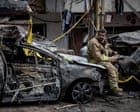
At the same time, Israel and Hezbollah are still trading strikes, keeping pressure on an already fragile regional situation. Trump also told US media that he had asked Israeli prime minister Benjamin Netanyahu to be more “low-key” in Lebanon, where Israel has continued its bombardment.
Netanyahu, for his part, said there is no ceasefire in Lebanon, after Israel launched fresh strikes. The remarks underline how quickly the diplomatic landscape remains shifting, even as international efforts continue to hold together a broader pause in the conflict.
Pakistan prepares for high-stakes talks
In Islamabad, the streets are under strict lockdown as Pakistan’s capital prepares to host what have been described as historic negotiations between Iran and the US. The talks are seen as a crucial attempt to secure an end to the war that has devastated the Middle East.
Pakistani officials say the negotiations will go ahead over the weekend as planned, despite growing uncertainty around the ceasefire and ongoing disputes over the terms of the discussions. The situation has left the talks balancing on a knife edge, with both sides under pressure to show progress.
The ceasefire between the US and Iran had already looked increasingly precarious before Trump’s latest comments. Continued violence in Lebanon has added to concerns that the agreement may not hold, especially if the parties involved cannot settle outstanding questions about implementation and wider regional security.
Ceasefire under strain
The latest developments reflect the fragility of efforts to de-escalate the broader Middle East crisis. While the ceasefire raised hopes of a step back from wider confrontation, events on the ground have repeatedly threatened to undo it.
Israel’s bombardment of Lebanon has continued alongside exchanges with Hezbollah, and the dispute over what the peace talks should achieve has only sharpened the sense of uncertainty. The closure of the Strait of Hormuz has now emerged as another major factor clouding the outlook.
For now, the focus is on whether the planned Iran-US negotiations in Islamabad can produce enough momentum to keep diplomacy alive. But with military action continuing and political tensions still high, the prospects for a durable settlement remain unclear.
The coming days are likely to be decisive. If the talks proceed as scheduled, they will test whether the competing sides can move beyond the latest flare-ups and agree on a framework that can withstand the pressure of a rapidly changing conflict.

