
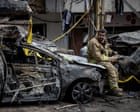
Israel and Hezbollah continued to trade strikes on Friday, while the fragile ceasefire linked to the Iran war faced fresh uncertainty. US President Donald Trump told American media that he had asked Israeli Prime Minister Benjamin Netanyahu to be more “low-key” in Lebanon, but the fighting has continued to cast doubt on any lasting calm.
Netanyahu, for his part, said there is no ceasefire in Lebanon as Israel launched new strikes. The competing statements underline just how unsettled the situation remains, even as diplomatic efforts continue behind the scenes.
In Pakistan, the streets of Islamabad were placed under strict lockdown as the capital prepared to host what officials have described as historic negotiations between Iran and the United States. The talks, due to take place over the weekend, are being presented as a possible path toward ending a war that has devastated the Middle East.
But the atmosphere around the negotiations is tense. The US-Iran ceasefire has looked increasingly precarious amid Israel’s continued bombardment of Lebanon and disagreements over the terms of the talks. Despite those concerns, Pakistani officials say the peace discussions will go ahead as scheduled.
The weekend meeting in Islamabad has taken on added importance because of the wider regional stakes. The promise of a breakthrough has raised hopes of de-escalation, but the continuing violence and unresolved disputes have left the outcome uncertain.
Trump’s comments have also added another layer of doubt. By casting uncertainty on the ceasefire while the Strait of Hormuz remains closed, he has highlighted how fragile the wider diplomatic picture has become. The strait’s closure continues to loom over efforts to stabilise the region and secure any meaningful end to the conflict.
For now, the situation remains fluid on several fronts at once: military action in Lebanon, diplomatic maneuvering between Washington and Tehran, and a high-security political backdrop in Islamabad. Each development appears to affect the others, making the planned negotiations more significant, but also more vulnerable, than ever.
Officials in Pakistan are pressing ahead with preparations, but the coming days will test whether the talks can survive the pressure of events on the ground. With strikes continuing and ceasefire terms still in dispute, the prospect of peace remains uncertain.

