
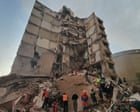
It took Israel only 10 minutes to carry out one of the worst mass-killings in Lebanon since the end of the country’s civil war in 1990. The strikes, described by officials and residents as part of a mission dubbed “Operation Eternal Darkness”, left Beirut in shock and anger as the scale of the destruction became clear.
In the Barbour neighbourhood of central Beirut, Omar Rakha said he heard the warplanes overhead but did not feel the explosions. He understood what had happened only when he woke up face down on the street, bleeding. The building next to his was destroyed by two Israeli bombs. Rakha then ran through the burning wreckage to look for his sister, screaming as he searched.
Residents and officials in Beirut said the thousand-pound bombs mainly struck civilian areas. The claim that the attack targeted Hezbollah positions was met with deep scepticism on the ground, where many said the damage had fallen far beyond any military objective.
The strikes have intensified an already devastating moment in Lebanon, where the scale and speed of the attack have left many trying to grasp how so much destruction could happen in such a short time. For people in the capital, the aftermath is not only about ruined buildings and shattered streets, but also about the fear that more violence could follow.
Lebanon has endured repeated conflict over the years, but the latest attack stands out for its speed and the number of dead. For many in Beirut, the devastation also revived painful memories of earlier wars and underscored how quickly urban life can be turned into a scene of fire, dust and loss.
As residents assessed the damage, the reaction in the city was shaped by grief, disbelief and anger. The words heard again and again in the aftermath reflected a common sentiment: there was no Hezbollah in the places that were hit, only homes, families and ordinary streets caught in the blast.

