
Keir Starmer has discussed with Donald Trump the need for a “practical plan” to get shipping moving again through the Strait of Hormuz, following the Middle East ceasefire, according to the Press Association.
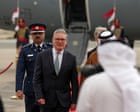
The prime minister made the call from Qatar, where he arrived on Thursday night ahead of meetings scheduled for Friday morning. A No 10 spokesperson said Starmer used the conversation to set out discussions he has had with Gulf leaders and military planners on restoring freedom of navigation in the Strait of Hormuz.
According to the readout, Starmer also explained efforts by the UK to bring together partners in order to agree on a workable plan. The spokesperson said he strongly condemned the Iranian attacks on Bahrain and reflected on the conversations he has had with other leaders across the region.
Starmer also stressed the importance of keeping the ceasefire in place so that it can lead to lasting peace. He said the UK would continue to stand “shoulder to shoulder” with Bahrain and other allies in the region.
The discussion with Trump came as Starmer concluded a tour of Gulf states at a time when the government is looking closely at the impact of regional tensions on trade routes and energy supplies. The Strait of Hormuz is a crucial shipping lane, and any disruption there can quickly affect markets and fuel costs.
The issue has added pressure to Starmer’s wider international agenda, which has focused on military de-escalation, regional diplomacy and the need to protect commercial shipping. In the background is concern about how conflict in the Middle East can ripple into higher costs for British households, including energy bills.
Starmer’s call with Trump underlines the government’s push to work with allies on a coordinated response. The No 10 statement suggested the prime minister wants agreement on a plan that is not just political in tone, but operationally realistic, with shipping and security concerns both in view.
The Gulf talks have also placed Bahrain at the centre of Britain’s diplomatic efforts, after the Iranian attacks mentioned in the Downing Street readout. Starmer’s message, as described by his office, was one of support for regional partners and insistence that the ceasefire should hold.
As he continues to engage leaders in the region and beyond, Starmer is trying to balance immediate security concerns with the broader goal of stability. The focus on the Strait of Hormuz suggests the government sees restoring shipping routes as a key test of whether the ceasefire can help create a more durable peace.
The prime minister’s conversations in the Gulf and his call with Trump point to a central challenge now facing western leaders: keeping trade lanes open, avoiding further escalation and ensuring that any truce in the region has practical follow-through.

