
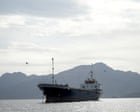
Vessels linked to Iran have continued moving through the Strait of Hormuz after the start of Donald Trump’s blockade, despite the wider pressure campaign on Iranian shipping and ports. The development comes as the United States has begun a naval blockade of Iranian ports after a deadline passed.
The confrontation has increased concern across global markets, especially because of the strategic importance of the Strait of Hormuz to international energy flows. The passage of ships under US sanctions has underscored the difficulty of enforcing restrictions at sea even as Washington escalates its measures on Iran.
South Korea warns of prolonged disruption
In Seoul, South Korean President Lee Jae Myung said the rising tensions around the Strait of Hormuz make it difficult to be optimistic about the fallout from the Iran war. He warned that high oil prices and pressure on supply chains are likely to continue for some time.
Lee told a cabinet meeting on Tuesday that the government should assume prolonged disruption in global energy and raw materials markets and strengthen its emergency response system.
He said: “For the time being, difficulties in global energy and raw materials supply chains and high oil prices will continue … I ask that we pursue the development of alternative supply chains, medium- to long-term industrial restructuring, and the transition to a post-plastic economy as top-priority national strategic projects.”
The warning reflects broader concerns that the crisis could affect manufacturing, transport and energy costs well beyond the immediate region. South Korea, like many major economies, depends heavily on imported energy and raw materials, making it particularly exposed to any prolonged disruption.
Diplomatic pressure continues
The situation is unfolding alongside diplomatic efforts aimed at limiting the conflict. France and the UK are due to chair talks on Friday, as governments continue to search for ways to contain the consequences of the war and the blockade.
The live update also noted the unusual nature of ongoing discussions involving Lebanon and Israel. The two countries have been at war in some form since the early 1980s, do not have diplomatic relations, and Lebanon bars entry to anyone with an Israeli stamp in their passport.
Against that backdrop, the fact that talks are taking place directly between the two governments has been described as highly unusual. The developments highlight how the crisis is pushing long-standing regional tensions into new diplomatic territory at the same time as military and economic pressure intensifies.
With the blockade of Iranian ports now in place and shipments still passing through the Strait of Hormuz, the next phase of the crisis is likely to be shaped by both enforcement at sea and the impact of disruption on global markets. For now, governments and businesses alike appear to be bracing for a period of sustained uncertainty.

