
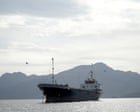
Ships linked to Iran continued to pass through the Strait of Hormuz after the start of Donald Trump’s blockade, even as the US moved to enforce a naval shutdown of Iranian ports once its deadline expired.
The development highlights the immediate tension around one of the world’s most important energy routes, where any disruption can quickly ripple through global markets. The blockade has already prompted concern about whether the conflict will deepen pressure on oil supplies and shipping.
South Korea warns of prolonged market strain
In Seoul, South Korean president Lee Jae Myung said the rising tension around the Strait of Hormuz made it difficult to feel optimistic about the wider fallout from the Iran war. He warned that high oil prices and supply-chain problems are likely to continue for some time.
Lee told a cabinet meeting on Tuesday that the government should assume there will be prolonged disruption in global energy and raw materials markets, and should strengthen its emergency response system.
He said: “For the time being, difficulties in global energy and raw materials supply chains and high oil prices will continue … I ask that we pursue the development of alternative supply chains, medium- to long-term industrial restructuring, and the transition to a post-plastic economy as top-priority national strategic projects.”
The comments reflect growing unease in major importing economies about the consequences of a wider regional confrontation. With oil prices already elevated, governments are bracing for further instability if shipping lanes face more sustained interference.
Diplomatic efforts move forward
Amid the military escalation, France and the UK are due to chair talks on Friday, adding a diplomatic track to the fast-moving crisis. The discussions come as international pressure increases for some form of de-escalation, even while armed and economic measures continue.
The source also notes that Lebanon and Israel have been at war in some form since the early 1980s, and that the two countries do not have diplomatic relations. Under Lebanese entry rules, people are not allowed to enter Lebanon if they have an Israeli stamp in their passport.
That context makes the fact that the current talks are taking place directly between the two governments especially notable. The meetings stand out not only because of the long-running hostility, but also because formal contact between the sides has been so limited for decades.
For now, the situation at sea and the diplomatic talks on land appear to be moving in parallel. Iran-linked vessels have still been making their way through the Strait of Hormuz, while the US blockade of Iranian ports marks a sharp escalation in Washington’s campaign against Tehran.
With energy markets watching closely, the next few days may show whether the disruption remains contained or starts to spread further across trade routes and regional politics.

