
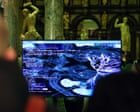
The grand entrance of the Victoria & Albert Museum is not the sort of place most visitors expect to hear a live-coded electronic set pounding through the hall. Yet that was the scene during the museum’s Friday Live celebration of play and performance, where a programmer/DJ from the collective London Live Coding performed beneath the building’s dome while LED screens flashed streams of code and pixelated imagery.
The event formed part of the V&A’s long-running Friday Late series, presented in collaboration with the London Games Festival. It brought together independent video games and immersive interactive works in a format designed to send visitors wandering through the museum’s halls, corridors and galleries in search of installations.
The setting itself sharpened the contrast between old and new. Ancient statues could be seen through nearby arches, while the music and visuals in the entrance created a fast-moving, digital atmosphere. The result was loud, strange and striking, and it underlined the way games and game-adjacent art can hold their own inside one of London’s most established cultural institutions.
One of the featured attractions was Thank Goodness You’re Here!, the Bafta-winning comedy game, which visitors could play on a giant screen beneath a 13th-century spiral staircase. Elsewhere, the museum’s more secluded spaces offered a different mood entirely. In the darkened Prince Consort’s gallery, groups of friends gathered around Sex With Friends, a humorous erotic physics puzzler in which ragdoll-like characters are guided into consensual sexual encounters. The game drew laughter from both players and onlookers as part of the evening’s deliberately playful tone.
That mix of performance, participation and spectatorship was central to the event. Rather than treating games as objects to be viewed passively, the museum used its rooms as active spaces for experimentation. Visitors were not just browsing exhibits; they were moving through a living programme of sound, code, screens and multiplayer interaction.
The appearance of live coding alongside video games also reflected the wider cultural reach of gaming-related creative work. London Live Coding’s set, built in real time through manipulated audio programs, sat naturally beside the interactive installations around it. Both relied on the idea that audiences can do more than watch. They can take part, explore, and shape what happens next.
For a museum with the V&A’s history, the event offered a reminder that contemporary play can sit comfortably among older forms of art and design. Video games, once often treated as a niche interest, are now part of broader conversations about performance, creativity and culture. Friday Live showed that clearly, turning the museum into a place where a comic game, a provocative puzzle and a live-coded set could share the same night.
It was, in other words, a vivid demonstration of gaming’s cultural clout. In the V&A’s venerable halls, video games were not presented as a novelty but as part of an expanding field of artistic and social expression.

