
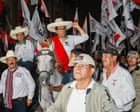
Peruvians are heading to the polls on Sunday in an election many hope will help bring an end to years of political turmoil, rising crime and repeated corruption scandals.
The vote comes after a turbulent decade in which the country has had nine presidents. That pattern of instability has left many voters frustrated and skeptical of the institutions meant to govern them.
Public anger is being driven by a mix of problems. Soaring violent crime has become a major concern, while corruption has continued to dominate politics. Trust in politicians and state institutions has also fallen sharply, adding to the sense that the country is stuck in a cycle of crisis.
A crowded and unpredictable race
About 27 million eligible voters will take part in one of Peru’s most unpredictable elections in recent memory. They must choose not only a president, but also contenders for a bicameral congress.
The presidential contest is unusually crowded, with a record 35 candidates on the ballot. The scale of the race has produced a ballot sheet measuring nearly half a metre, the longest in the country’s history.
With so many candidates and such a fractured political landscape, the election is expected to be difficult to read. No single figure has emerged as an obvious favorite, and the large field reflects the broader fragmentation that has shaped Peruvian politics in recent years.
Crime and corruption dominate debate
Issues of security and corruption are at the center of voter concerns. As violent crime has increased, many Peruvians are looking for a government capable of restoring order and rebuilding confidence in public life.
At the same time, a series of corruption scandals has deepened public frustration and fed the belief that the political class has failed to deliver stability or accountability. For many voters, this election is less about ideological choice than about finding any path out of recurring crisis.
The challenge for Peru’s next president will be to govern in a climate of distrust while confronting the problems that have unsettled the country for years. Whether Sunday’s vote can produce a clearer political direction remains uncertain, but the demand for change is unmistakable.
For a country accustomed to rapid political turnover, the election offers the possibility of a reset. Many Peruvians will be watching closely to see whether the next government can finally interrupt the pattern of instability that has defined national politics for much of the past decade.

