
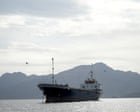
US-sanctioned vessels have passed through the Strait of Hormuz despite the widening confrontation in the region, as Washington’s naval blockade on Iranian ports took effect after a deadline expired. The developments come as France and the UK prepare to co-host a summit in Paris on Friday, with President Emmanuel Macron and Prime Minister Keir Starmer expected to chair the talks.
The latest escalation has sharpened concern across the region and beyond, particularly because the Strait of Hormuz is a vital shipping route for global energy supplies. The movement of the sanctioned ships through the strait underscores how fragile the situation remains even as military and diplomatic responses unfold at the same time.
In South Korea, president Lee Jae Myung said the rising tensions around the strait made it difficult to feel optimistic about the fallout from the Iran war. Speaking at a cabinet meeting on Tuesday, he warned that high oil prices and pressure on supply chains are likely to continue for a prolonged period.
Lee said the government should assume that disruption in global energy and raw materials markets will persist. He urged ministers to strengthen the country’s emergency response system and to prepare for long-term strain rather than treating the situation as short-lived.
He added that, for now, difficulties in energy and raw materials supply chains and elevated oil prices would continue. He called for work on alternative supply chains, medium- to long-term industrial restructuring, and the transition to a post-plastic economy as top-priority national strategic projects.
The broader crisis has also continued to shape political calculations in Lebanon. The country has been at war in some form with Israel since the early 1980s, and the two states do not have diplomatic relations. Lebanon also restricts entry for travellers with an Israeli stamp in their passport.
That backdrop makes the current discussions especially notable. Talks involving the two governments are taking place directly, which has been described as an unusual and striking development given the long-standing absence of formal relations between the two sides.
As the regional crisis deepens, diplomacy and military pressure are moving in parallel. With the blockade in place, the flow of shipping through one of the world’s most sensitive maritime chokepoints remains a key issue, while European leaders prepare to help steer talks aimed at limiting further escalation.
The situation is likely to remain volatile in the coming days, with the impact of the conflict already being felt in energy prices, logistics and political debates far beyond the immediate area of fighting.
Further developments are expected as the Paris meeting approaches and as governments in the region and around the world respond to the consequences of the crisis.
Continue reading…

