
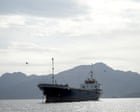
US President Donald Trump has said talks with Iran could resume “over the next two days”, adding that the US is “inclined” to go to Pakistan for further discussions. His remarks came as Iran-linked vessels passed through the Strait of Hormuz after the start of the US blockade of Iranian ports.
The developments add another layer to an already volatile regional crisis, with shipping, energy markets and diplomacy all moving at speed. The blockade began after a deadline passed, intensifying pressure on Iran and raising concern about possible wider disruption to global trade.
South Korea warns of lasting economic strain
In Seoul, South Korean President Lee Jae Myung said the escalating tension around the Strait of Hormuz made it difficult to be optimistic about the fallout from the war involving Iran. He warned that high oil prices and supply-chain strains were likely to continue for some time.
Speaking at a cabinet meeting on Tuesday, Lee said the government should assume prolonged disruption in global energy and raw materials markets and strengthen its emergency response system.
He also urged South Korea to prepare for a longer period of instability by expanding alternative supply chains and accelerating industrial restructuring over the medium to long term.
“For the time being, difficulties in global energy and raw materials supply chains and high oil prices will continue … I ask that we pursue the development of alternative supply chains, medium- to long-term industrial restructuring, and the transition to a post-plastic economy as top-priority national strategic projects.”
Diplomatic risks remain high
The crisis is unfolding against a backdrop of intense regional divisions and long-standing political barriers. Lebanon and Israel have been at war in some form since the early 1980s, and the two countries do not have diplomatic relations.
Travel restrictions remain another sign of that distance: people are not allowed to enter Lebanon if they have an Israeli stamp in their passport. Against that history, direct talks between the two governments are being described as extraordinary.
The situation around the Strait of Hormuz remains especially sensitive because of its importance to global energy shipments. With sanctions, naval action and diplomacy all advancing at once, markets and governments are watching closely for signs of escalation or a possible breakthrough.
For now, the outlook is uncertain. The United States is pressing ahead with maritime pressure on Iran while also leaving the door open to talks. At the same time, regional governments are preparing for the possibility that disruptions to oil, raw materials and shipping may last well beyond the current standoff.

