
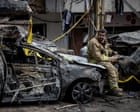
Israel and Hezbollah continued to trade strikes on Friday, even as Donald Trump told US media he had asked Benjamin Netanyahu to be more “low-key” in Lebanon.
The latest developments come amid wider uncertainty over whether a fragile ceasefire connected to the Iran war can hold. Trump cast doubt on the truce’s stability, pointing to the continued closure of the Strait of Hormuz, a key waterway for global shipping.
Benjamin Netanyahu said there is no ceasefire in Lebanon as Israel launched fresh strikes, underscoring how volatile the situation remains across the region.
IMF warns of lasting damage
The International Monetary Fund said on Thursday that it will lower its global growth forecasts because of the Middle East war. IMF managing director Kristalina Georgieva warned that the conflict could have “scarring effects” even if the violence eases.
“Even in a best case, there will be no neat and clean return to the status quo ante,” Georgieva said.
She added that the wider spillovers from the war are likely to increase demand for IMF balance-of-payments support in the near term. The fund expects that demand to rise by between $20 billion and $50 billion, with the lower end of that range more likely if the ceasefire holds.
The comments reflect growing concern that the conflict’s economic effects will not end with the fighting itself. Disruption to trade, pressure on energy markets and uncertainty in the region could all weigh on growth well beyond the immediate battlefield.
Regional tensions remain high
The latest fighting between Israel and Hezbollah adds to an already fragile security picture. Trump’s remarks about asking Netanyahu to take a lower-profile approach in Lebanon highlight the diplomatic pressure surrounding Israel’s military activity there.
At the same time, the dispute over the Strait of Hormuz continues to draw attention because of its strategic importance. Any prolonged closure could affect shipping and energy flows far beyond the Middle East, adding further strain to an already unsettled global outlook.
The IMF’s warning suggests policymakers are preparing for a period of prolonged economic uncertainty. Even if a ceasefire remains in place, the institution says the region may not quickly return to the conditions that existed before the war.
For now, the conflict continues to unfold on multiple fronts: military, political and economic. Israel and Hezbollah are still trading fire, ceasefire questions remain unresolved, and international officials are warning of consequences that could last long after the shooting stops.

