
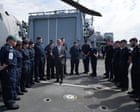
Richard Barrons, the former head of UK Joint Forces Command, has backed George Robertson’s criticism of Britain’s armed forces, saying the country’s military is “too small and undernourished for the world that we now live in”.
The comments came as the political focus in Westminster turned to the consequences of the Iran conflict and the wider pressure it is placing on energy markets, defence policy and international relations. Downing Street said Keir Starmer and Emmanuel Macron, the French president, will co-chair the next meeting of a group of around 40 countries examining options for keeping the Strait of Hormuz open once the Iran war ends. That meeting is due to take place in Paris on Friday.
New cabinet committee on Iran fallout
According to the Press Association, Starmer will also lead a new cabinet committee dealing with the fallout from the Iran conflict. The group, called the Middle East response committee, held its first meeting on Tuesday. Its initial focus is on efforts to reopen the Strait of Hormuz, a shipping route that is vital to global oil and gas supplies.
The committee was set up to manage both the domestic and international consequences of the war. The conflict has already pushed up energy prices, caused turbulence in stock markets and exposed deep disagreements between the United States and its traditional European allies.
Defence spending debate intensifies
Barrons’s remarks add to a broader debate over whether Britain is adequately prepared for the current security environment. By backing Robertson’s argument, he has aligned himself with criticism that the UK’s armed forces no longer have the size or resources needed for the demands placed on them by today’s threats.
The issue of military underfunding has been a recurring point of contention in defence circles, and the latest comments are likely to sharpen pressure on ministers as they respond to both the Iran crisis and wider questions about Britain’s military capability.
At the same time, the government is trying to balance immediate diplomatic and security concerns. Keeping the Strait of Hormuz open is seen as crucial because any disruption to the route could have major consequences for global energy supplies and further destabilise already volatile markets.
The Paris meeting on Friday is expected to bring together the countries involved in exploring how to maintain that vital maritime corridor. The talks will take place against a backdrop of uncertainty about the war’s wider regional effects and the strain it has placed on alliances between Washington and European capitals.
Starmer’s decision to take direct charge of the new cabinet committee signals the importance the government is attaching to the crisis. With prices rising and markets reacting sharply, ministers are now facing the challenge of managing both the strategic and economic consequences of the conflict.
The live political debate in London is therefore moving along two connected lines: the immediate response to the Iran war and the longer-running argument over whether Britain’s defence budget and armed forces are sufficient for the world ahead.

