
Jack Welch’s approach to evaluating employees—often summarized as the “20–70–10” performance distribution—is one of the most debated management ideas of the modern corporate era. Supporters say it creates clarity and raises standards. Critics argue it can damage culture, collaboration, and psychological safety.
So what is “employee evaluation the Jack Welch way,” how does it work in real life, and should you use it today?
What Is the Jack Welch Performance Evaluation Method?
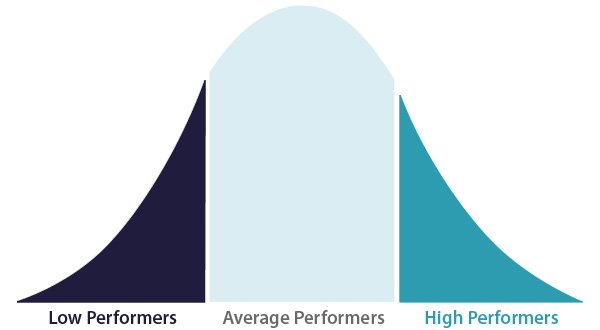
Welch popularized a forced ranking system sometimes called the vitality curve. The basic idea:
-
Top 20%: your highest performers (“A players”)
Reward them, promote them, give them big opportunities. -
Middle 70%: solid contributors (“B players”)
Coach them, develop them, and push performance upward. -
Bottom 10%: lowest performers (“C players”)
Manage them out, replace them, or move them to a better fit.
The method assumes that every organization has performance variation—and that leaders should be explicit about it, not vague.
Why It Was Attractive (and Still Is)
Many managers struggle with performance reviews because they become:
-
soft, political, or overly emotional
-
inconsistent across teams
-
“everyone is above average” rating inflation
Welch’s model forces a decision. It creates strong signals about what “good” looks like and reduces the gray zone.
Real-Life Example: Sales Team
Imagine a sales org with 50 reps.
-
The top 10 reps consistently exceed quota, bring in strategic accounts, and mentor others. They’re your top 20%.
-
The middle group hits quota some quarters and misses others. They’re not failing—but they’re not leading. That’s your 70%.
-
A handful repeatedly miss quota, show weak pipeline discipline, and ignore coaching. That’s your bottom 10%.
How the Welch method would handle it:
-
Top 20%: bigger territories, higher commission accelerators, leadership track
-
Middle 70%: structured coaching plan, weekly pipeline review, skill development
-
Bottom 10%: performance improvement plan (PIP) with a short timeline; exit if no change
This can improve numbers quickly—but it can also increase pressure and internal competition.
Real-Life Example: Product/Engineering (Where It Gets Tricky)
In engineering, output isn’t always visible in weekly metrics. A developer may spend 3 weeks fixing reliability issues that prevent massive outages. Another may ship many features that create tech debt.
Forced ranking can fail here if you evaluate only what’s easy to count.
Better version of the method in engineering:
-
Define impact categories: reliability, speed, customer outcomes, quality, leadership
-
Use peer input and project outcomes
-
Avoid ranking based on “lines of code” or pure visibility
The Biggest Benefits
1) Performance clarity
People know where they stand. Managers avoid vague feedback like “You’re doing fine.”
2) Strong accountability
It becomes harder to keep chronic low performance around “because it’s uncomfortable” to address it.
3) Focus on developing the middle
Welch’s model isn’t only about the bottom 10%. The real leverage is improving the 70% through coaching and systems.
The Biggest Risks
1) Toxic competition
If people feel they’re competing against teammates for survival, collaboration drops. Knowledge-sharing becomes risky.
2) Good people can be labeled “bottom” in strong teams
In a high-talent team, the “bottom 10%” might still be good—just not the best. Forced exits can destroy trust.
3) Rating depends on manager quality
A weak manager can unfairly rank someone low due to bias, communication style, or visibility.
4) It can punish innovation
People may avoid risky experiments if failing once can push them into the bottom category.
Should You Use It Today?
For most modern organizations, a strict forced ranking system is too blunt. But the underlying principles—clarity, accountability, development—are still valuable.
When it can work
-
roles with measurable performance (sales, support, some operations)
-
fast-growing organizations that need standards
-
environments where low performance is being ignored and harming the team
When to avoid it
-
highly collaborative work (research, product innovation, complex engineering)
-
teams with limited headcount (ranking becomes political)
-
cultures trying to build psychological safety and long-term retention
A Modern Alternative: “Standards + Coaching + Decisive Action”
You can capture the good part of Welch without the worst outcomes:
-
Set clear performance standards (what “great” means)
-
Coach the middle group with specific plans
-
Address low performance quickly, but don’t force a fixed percentage
-
Reward top performers transparently (scope, pay, opportunities)
-
Use calibration (cross-team review) to reduce bias
This approach preserves accountability while avoiding “we must fire 10% no matter what.”
Final Takeaway
Jack Welch’s evaluation style didn’t “stop being relevant”—but it needs updating. The core lesson is still useful: be honest about performance, invest in developing people, and don’t tolerate repeated low standards. The mistake is turning that into a rigid formula that creates fear.

