
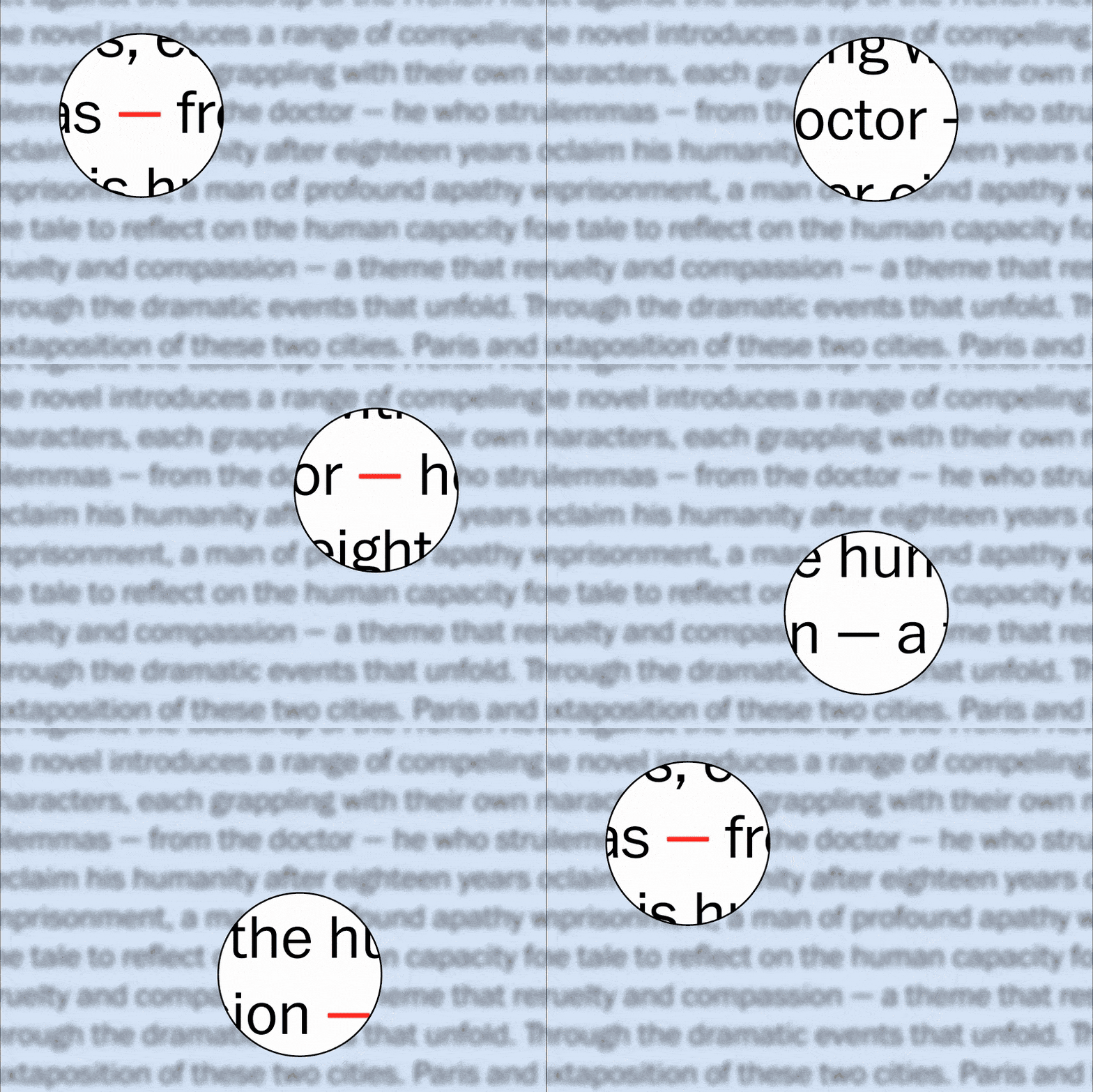
The em dash (—) is having a moment. It’s everywhere in modern writing: news, newsletters, blogs, product copy, even corporate memos. And now that AI tools generate a huge share of first drafts, the em dash is more than a style choice—it’s a signal. A signal of voice, rhythm, and sometimes… a signal of machine-made prose.
So what’s the real story behind AI and the em dash? Why does AI love it, when should you use it, and how do you avoid turning your writing into a dash-heavy blur?
What is an em dash, and why do writers love it?
An em dash (—) is a punctuation mark used to create a strong break in a sentence. It can replace commas, parentheses, or even a colon, and it often adds drama or conversational flow.
Here’s what it does best:
-
Adds emphasis: “This is the truth—no excuses.”
-
Inserts a side thought: “The launch—after months of delays—finally happened.”
-
Creates a punchy turn: “We had a plan—then reality arrived.”
The em dash feels natural because it mirrors how people think: we start, we pivot, we clarify, we add a sharp aside.
Why AI uses em dashes so much
AI writing models tend to favor punctuation that helps them:
-
Link ideas smoothly without committing to a strict structure
-
Add nuance quickly without long explanations
-
Maintain momentum in a sentence with multiple clauses
When an AI is trying to sound “human,” the em dash is a shortcut. It creates the impression of spontaneity and voice. It also solves a common AI problem: transitioning between two related thoughts without sounding robotic.
That’s why you’ll see AI output like:
-
“AI is changing work—especially for content teams.”
-
“The results were strong—but the risks remain.”
-
“This strategy works—if you execute consistently.”
Nothing wrong with that. The issue is volume.
When em dashes improve your writing
Used well, em dashes make writing clearer and more engaging. Here are the highest-value situations:
1) To add clarity without clutter
Before: “The policy, which was updated last week, reduces response time.”
After: “The policy—updated last week—reduces response time.”
2) To create emphasis
“Your brand is not your logo—it’s your reputation.”
3) To show contrast fast
“The idea is simple—the execution is not.”
4) To keep a sentence readable
If you have too many commas, an em dash can rescue the rhythm.
When em dashes become a problem (especially with AI)
Overuse creates three issues:
1) It starts to sound “AI-ish”
Readers may not think “this is AI,” but they’ll feel the voice is generic. The em dash becomes a crutch for transitions.
2) It weakens structure
When you replace every colon, comma, and full stop with a dash, your writing loses hierarchy. Everything feels like the same level of importance.
3) It can confuse meaning
Compare:
-
“We approved the plan—after the delay.” (Did the delay cause the approval? Or did approval happen after?)
Sometimes punctuation needs to be more precise.
The “em dash rule” for clean, human writing
If you want a simple guideline that works for blogs, newsletters, and SEO content:
Use no more than 1–2 em dashes per 200 words.
If you’re writing in a punchy, opinion style, you can stretch it slightly—but don’t let it take over the page.
Also: avoid stacking dashes too close together. If you’ve used one in a paragraph, try commas or shorter sentences next.
Em dash vs hyphen vs en dash (quick clarity)
These are not the same:
-
Hyphen (-): joins words
“high-risk, long-term, AI-driven” -
En dash (–): often shows ranges
“2024–2026”, “pages 10–12” -
Em dash (—): creates a strong break in a sentence
“We shipped the product—finally.”
Many people type two hyphens -- instead of an em dash. That’s okay in casual contexts, but for polished publishing, use the real em dash.
How to use em dashes in professional SEO content
For search-optimized posts, clarity wins. Em dashes can help—but they should support readability, not replace structure.
Use em dashes:
-
in introductions to create a hook
-
in headings or subhead explanations sparingly
-
in short, quotable lines (great for snippets)
Avoid em dashes:
-
in long, complex sentences (break them up instead)
-
in highly technical writing where precision matters
-
in legal/compliance writing (use explicit punctuation)
The AI editing trick: “dash audit”
If you used AI to draft a post, do this fast check:
-
Search for —
-
Remove 30–50% of them
-
Replace with:
-
a period (.) for clarity
-
a colon (:) for explanation
-
parentheses for true side-notes
-
a shorter sentence when needed
-
This one step instantly makes AI text feel more intentional and more human.
Final takeaway
AI didn’t invent the em dash—but it’s amplifying it. The em dash is powerful because it’s flexible, expressive, and modern. But that same flexibility makes it easy to overuse, especially in AI-generated drafts.
If you want writing that feels sharp, credible, and unmistakably yours: use the em dash like spice, not like the main ingredient.

