
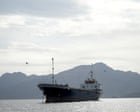
US President Donald Trump has said talks with Iran could resume “over next two days,” adding that the US is “inclined” to go to Pakistan for further discussions. His comments came as ships linked to Iran continued to pass through the Strait of Hormuz after the start of a US naval blockade of Iranian ports.
The latest developments have sharpened concerns about the regional fallout from the conflict and the impact on global energy flows. The Strait of Hormuz is one of the world’s most important shipping routes, and any disruption there is closely watched by governments and markets alike.
US blockade begins after deadline passes
The US has begun a naval blockade of Iranian ports after a deadline passed, marking a new stage in pressure on Tehran. According to the live report, Iran-linked vessels were still able to pass through the strait after the blockade began, underscoring the uncertainty surrounding enforcement and the immediate effects on shipping.
The situation has added to fears that the Iran war could widen its economic consequences well beyond the region. Oil prices have already been pushed higher by the tension, and businesses dependent on raw materials and shipping routes are facing fresh disruption.
South Korea warns of lasting pressure
South Korean President Lee Jae Myung said the rising tensions around the Strait of Hormuz make it difficult to be optimistic about the fallout from the war. Speaking at a cabinet meeting on Tuesday, he warned that high oil prices and supply-chain strains are likely to continue.
Lee said the government should assume that prolonged disruption in global energy and raw materials markets will persist. He also called for stronger emergency measures and urged officials to treat the situation as a national strategic priority.
For the time being, difficulties in global energy and raw materials supply chains and high oil prices will continue, Lee said in the meeting. He asked for work on alternative supply chains, medium- to long-term industrial restructuring, and the transition to a post-plastic economy to be treated as top-priority national strategic projects.
Regional diplomacy under strain
The conflict is also testing diplomatic relations across the Middle East. Lebanon and Israel have remained in a state of war in some form since the early 1980s, and the two countries do not have diplomatic relations. Lebanon also bars entry to people who have an Israeli stamp in their passport.
Against that backdrop, the fact that talks are taking place directly between the two governments has been described as remarkable. The report notes that the direct engagement itself is something “really astonishing,” reflecting how unusual such contact remains.
As the crisis continues, the combination of military escalation, shipping disruption and economic pressure is widening the sense of uncertainty. With the Strait of Hormuz under intense scrutiny and regional governments preparing for longer-term fallout, the situation remains fluid.

