
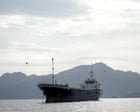
US President Donald Trump has said talks with Iran could resume “over next two days,” as tensions intensify over the Strait of Hormuz and the United States begins a naval blockade of Iranian ports after a deadline passed.
Trump also said the country was “inclined” to go to Pakistan for more talks. The remarks came as Iran-linked vessels continued to pass through the strait after the start of Trump’s blockade, underscoring the wider uncertainty surrounding shipping and energy flows in the region.
South Korea warns of prolonged disruption
In Seoul, South Korean president Lee Jae Myung said rising tensions around the Strait of Hormuz made it difficult to be optimistic about the fallout from the Iran war. He warned that high oil prices and supply-chain strains are likely to continue for some time.
Speaking at a cabinet meeting on Tuesday, Lee said the government should treat prolonged disruption in global energy and raw materials markets as a given and strengthen its emergency response system. He urged officials to prepare for a sustained period of pressure on trade and supply chains.
“For the time being, difficulties in global energy and raw materials supply chains and high oil prices will continue … I ask that we pursue the development of alternative supply chains, medium- to long-term industrial restructuring, and the transition to a post-plastic economy as top-priority national strategic projects.”
Shipping concerns grow around the Strait of Hormuz
The Strait of Hormuz remains a key global shipping route, and the latest escalation has raised fears of wider disruption to energy markets. The passage of sanctioned or Iran-linked vessels after the blockade began has added to concerns about how effective the restrictions will be and what impact they may have on commercial traffic in the area.
With markets already sensitive to instability in the Middle East, the combination of military pressure, diplomatic uncertainty and the threat to shipping lanes has increased the risk of higher costs for fuel and imported goods.
Lebanon-Israel talks draw attention
Elsewhere in the regional crisis, there has been attention on direct talks between Lebanon and Israel. The two countries have been at war in some form since the early 1980s, and they do not have diplomatic relations. Lebanon also does not allow entry to people with Israeli stamps in their passports.
That makes the fact that the talks are taking place directly between the two governments highly unusual. As the source noted, the development is “really astonishing,” given the long history of conflict and the absence of formal ties.
The wider Middle East crisis continues to unfold across several fronts at once: military action at sea, diplomatic manoeuvring over Iran, and growing concern among governments and markets about the knock-on effects for energy, transport and industrial supply lines.
For now, the immediate focus remains on whether the latest round of pressure will lead to further talks with Iran in the coming days, and whether the blockade around Iranian ports will continue to shape shipping through one of the world’s most important chokepoints.

