
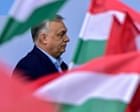
The Kremlin is adjusting to the loss of Viktor Orbán, Hungary’s longtime prime minister and Russia’s closest ally in Europe, after his election defeat. On Tuesday, Moscow signaled that it would take a cautious approach to the country’s new leadership while noting that Hungary’s prime minister-elect, Péter Magyar, appears open to practical engagement.
The shift matters well beyond Budapest. Orbán’s government had often stood apart from other European Union members on relations with Moscow, making Hungary an important partner for the Kremlin at a time when many European governments have moved into open opposition to Russia. His departure now forces Russian officials to reconsider how dependable non-autocratic governments can be as partners, especially when political change can quickly alter foreign policy.
Kremlin spokesperson Dmitry Peskov said Moscow welcomed what it understood to be Magyar’s willingness to pursue pragmatic talks. He framed Russia’s position as one of mutual readiness for dialogue, while stressing that the Kremlin would judge the new relationship by the actions of the incoming Hungarian government.
“For now, we can note with satisfaction, as far as we understand, his [Magyar’s] willingness to engage in pragmatic dialogue,” Peskov said. “In this instance, there is mutual willingness on our part, and we will then proceed to take our cue from the specific steps taken by the new Hungarian government.”
The comments suggest that Moscow is not rushing to redraw its position, but neither is it dismissing the possibility of working with Hungary’s new leadership. Instead, the Kremlin appears to be waiting to see whether Magyar’s government will continue any of the more Russia-friendly elements associated with Orbán’s tenure or take a markedly different path.
For Russia, the outcome in Hungary is more than a domestic political change. It is a reminder that alliances built on personal ties and political convenience can be unstable, particularly when they depend on leaders who are vulnerable to electoral defeat. Orbán’s loss may therefore become a wider test case for the Kremlin as it evaluates how far it can rely on governments outside its authoritarian circle.
At the same time, the tone from Moscow was notably restrained. Rather than criticism or hostility, the Kremlin presented itself as prepared for conversation and careful observation. That approach reflects the uncertainty created by Hungary’s new era, and the broader challenge for Russia as it seeks partners in Europe amid shifting political realities.
With Péter Magyar set to lead Hungary’s next government, the first signals from Moscow indicate a pragmatic, if guarded, readiness to engage. What follows will depend on the concrete choices made in Budapest and how quickly the new administration defines its stance toward the Kremlin.

