
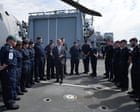
An ex-army chief has backed comments by Pete Hegseth mocking the Royal Navy, arguing that the UK’s armed forces are too small and too lightly equipped for the demands of today’s security environment.
Richard Barrons supported George Robertson’s warnings about the state of military readiness, saying British forces are “too small and undernourished for the world that we now live in”. The remarks add to growing concern over whether the UK has done enough to keep pace with deteriorating international security.
The discussion comes against a backdrop of renewed political debate about defence funding, the war in Ukraine and Britain’s wider responsibilities in Europe. With Russia’s invasion of Ukraine continuing, the issue of military capability has become a central test for the government and for opposition parties alike.
In the live political coverage, Liberal Democrat leader Ed Davey was also asked about a separate controversy involving Nigel Farage and his investment in a bitcoin firm. Davey said Farage, who leads Reform UK, appeared to be following in Donald Trump’s footsteps by investing in crypto while also promoting it publicly.
Davey said he believed MPs should be banned from promoting financial services or products. He argued that Farage’s actions raised the question of whether he was encouraging people to put money into a risky business.
“He’s now promoting this business,” Davey said, according to the live blog. “The question is, is he persuading people to put money into a risky business?”
He then set out what he sees as the wider principle behind the issue, saying rules for MPs need to change so they cannot promote specific financial products in the way he says Farage has been doing.
The defence debate, however, remained the larger political theme. Davey said the country needed to come together in the face of serious military challenges, pointing to war on the European continent for the first time in years and to the threat posed by Russia’s invasion of Ukraine.
He argued that those events should have served as a clear wake-up call and said the government had not moved as quickly as it should have in response to the circumstances.
Pressure on the government
The comments reflect a broader sense of urgency across Westminster over defence readiness and the scale of the UK’s military commitments. Barrons’ remarks, and his support for criticism of the Royal Navy, reinforce a long-running argument that Britain’s armed forces have been stretched too thin.
The live exchange also underlined how defence policy is increasingly overlapping with questions of political credibility and national security leadership. While one line of debate focused on military underfunding, another dealt with standards in public office and the rules governing MPs’ outside interests.
For critics of the government, the two issues are linked by a common theme: whether ministers and parliamentarians are acting quickly and decisively enough when the stakes are high. On defence, they point to the need for faster action. On parliamentary conduct, they argue for clearer rules and tighter limits.
As the conversation continues, the central question remains whether the UK is properly equipped, politically and militarily, for the threats it faces. Barrons’ intervention, together with the wider warnings from figures such as Robertson, suggests that scepticism over the state of Britain’s armed forces is unlikely to fade any time soon.

