
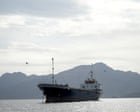
Sanctioned ships have passed through the Strait of Hormuz despite the widening crisis in the region, as the US launched a naval blockade of Iranian ports after a deadline expired. The developments come as France and the UK prepare to co-chair talks in Paris on Friday, placing diplomacy and confrontation side by side in one of the most volatile moments of the Iran war.
The situation around the strait remains a major concern for governments dependent on global energy flows. South Korean president Lee Jae Myung said on Tuesday that the rising tensions make it difficult to feel optimistic about the fallout, warning that higher oil prices and supply-chain disruption are likely to continue for some time.
Speaking at a cabinet meeting, Lee said the government should assume that disruption in the global energy and raw materials markets will be prolonged and should strengthen its emergency response system. He urged officials to prepare for lasting pressure on supply chains and prices rather than treating the current crisis as short-lived.
“For the time being, difficulties in global energy and raw materials supply chains and high oil prices will continue … I ask that we pursue the development of alternative supply chains, medium- to long-term industrial restructuring, and the transition to a post-plastic economy as top-priority national strategic projects.”
The remarks underline the broader economic risks created by the conflict. The Strait of Hormuz is a critical shipping route, and any disruption there can affect oil markets, trade flows and industrial supply chains far beyond the region itself.
Meanwhile, the diplomatic track is also moving in a remarkable direction. Lebanon and Israel have been at war in some form since the early 1980s, and the two countries do not have diplomatic relations. Under normal conditions, Lebanon does not allow entry to anyone with an Israeli stamp in their passport. Against that background, the fact that direct talks are taking place between the two governments has been described as extraordinary.
The talks are set against a wider backdrop of regional escalation, with pressure building on multiple fronts at once: naval action at sea, sanctions enforcement, and efforts by European governments to keep a diplomatic channel open. France and the UK are expected to play a central role by chairing the Paris discussions on Friday.
The emerging picture is one of simultaneous containment and escalation. Sanctioned vessels continue to move through a strategic chokepoint, the US has begun blocking Iranian ports, and regional governments are warning of prolonged economic fallout. At the same time, diplomats are trying to keep negotiations alive, even where long-standing political and military hostilities have made direct contact rare.
For countries such as South Korea, the message is that the crisis is no longer limited to the battlefield or the Persian Gulf. It is already being felt in energy prices, shipping routes and industrial planning, with governments being pushed to prepare for a longer period of instability.

