
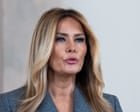
Melania Trump made a surprise appearance at the White House on Thursday, using the moment to say that she “never had a relationship” with the late child sex offender Jeffrey Epstein or his accomplice Ghislaine Maxwell.
Her comments immediately pushed Epstein back onto the political agenda, even as attention had been centered on the US and Israel’s war in Iran. The timing of the intervention added another layer of difficulty for her husband, Donald Trump, who was already facing growing pressure as a fragile ceasefire between the US and Iran appeared to be under strain.
At the same time, US lawmakers have been raising concerns about the president’s mental stability, further intensifying the scrutiny around the White House.
A new distraction for Trump
The appearance by Melania Trump has become part of a broader political moment in which several crises are colliding. Rather than settling the public conversation, it has reopened attention on Epstein and Maxwell while foreign policy developments continue to dominate headlines.
That comes as the ceasefire agreed between the US and Iran seemed increasingly vulnerable. The situation places Donald Trump under pressure on multiple fronts, with questions emerging both about his handling of the conflict and about the wider political consequences at home.
On The Latest and Politics Weekly America
Lucy Hough speaks with Guardian US editor Betsy Reed about the significance of the moment and the political implications surrounding Trump’s presidency. The discussion also connects to Jonathan Freedland’s Politics Weekly America, where he appears with the Guardian’s Washington bureau chief David Smith to consider whether Trump could be forced out of office.
The episode examines how quickly the focus has shifted from war and ceasefire tensions to renewed attention on the Epstein controversy, and what that could mean for the administration moving forward.
Listen here or wherever you get your podcasts.

