
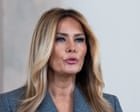
Melania Trump made a surprise appearance at the White House on Thursday, using the moment to say that she “never had a relationship” with the late child sex offender Jeffrey Epstein and his accomplice Ghislaine Maxwell. Her remarks quickly pushed Epstein back onto the political agenda at a time when attention had largely been fixed on the war involving the US, Israel and Iran.
The intervention came at a difficult moment for Donald Trump. The fragile ceasefire agreed between the US and Iran already appeared to be under strain, and the political debate around the president was being intensified by concerns raised by US lawmakers over his mental stability.
The renewed focus on Epstein adds another layer of pressure to an already tense week in Washington. For Trump, the return of a long-running and politically damaging issue comes just as the administration is trying to manage the fallout from the conflict in Iran and maintain the ceasefire agreement.
A shifting political focus
For much of the week, the main public discussion had centered on the military and diplomatic stakes of the war in Iran. Melania Trump’s appearance changed that balance, bringing old questions about Epstein back into view and reviving a subject that has repeatedly caused controversy in US political life.
The White House appearance was unexpected and notable not only because of the setting, but because of the timing. It inserted a personal denial from the first lady into a moment already marked by foreign policy strain and renewed scrutiny of the president.
At the same time, lawmakers are raising the alarm over Trump’s mental stability, adding to the sense of political instability surrounding the administration. That concern, combined with the fragile state of the ceasefire, has made the president’s position look more exposed.
Discussion with The Guardian
Lucy Hough spoke to the Guardian US editor, Betsy Reed, about the developments. The conversation forms part of The Latest, with Reed offering perspective on the political significance of Melania Trump’s intervention and the broader pressure facing the president.
Separately, Jonathan Freedland discusses the situation on Politics Weekly America with the Guardian’s Washington bureau chief David Smith, including the question of whether Trump could be forced out of office.
The latest developments bring together several threads that have defined the political conversation in recent days: the war with Iran, uncertainty around the ceasefire, renewed attention on Epstein, and rising concern inside Washington about Trump himself.
With those issues now colliding, the White House faces a politically difficult moment in which foreign policy, personal controversy and questions about the president’s fitness are all being debated at once.

