
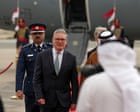
Keir Starmer has directly blamed US president Donald Trump and Russian president Vladimir Putin for contributing to higher energy bills in Britain, saying he is “fed up” with their actions.
The prime minister made the comments as he concluded a tour of Gulf states, setting out a clear link between global instability and the pressure facing British consumers. His intervention comes against the backdrop of continuing conflict in Ukraine and tensions in the Middle East, both of which have affected energy markets and wider security policy.
Starmer’s remarks are notable because they explicitly place responsibility on Trump as well as Putin, with the prime minister arguing that the consequences of their behaviour are being felt by households in the UK through higher costs.
Defence announcement on anti-drone missiles
Alongside the political comments, the Ministry of Defence announced that it is buying “Skyhammer” anti-drone interceptor missiles and launchers for the UK armed forces and Gulf allies. The systems are intended to counter Shahed-style kamikaze drones launched by Iran.
In a news release, the MoD said that, subject to contract, the first substantial tranche of missiles and launchers will be delivered to the ministry in May. More missiles and associated launchers are expected to be supplied within the first six months of the agreement.
The department said the purchase shows how the UK defence industry can respond quickly, drawing lessons from the conflicts in Ukraine and the Middle East to provide cost-effective air defence for the UK and its partners.
Defence secretary John Healey said the project reflects the pace at which British industry can deliver when it is required, and that the capability is based on lessons learned from current wars in Ukraine and the Middle East.
UK and US military ties remain central
Healey also pointed to the practical value of UK-US cooperation, saying that basing permissions agreed between the two countries have been important for US military operations.
He highlighted the role of British personnel in northern Iraq, where the RAF regiment has been working almost daily to take down drones and jointly protect US forces at a shared base.
Healey said that, for him, the most important point is to focus on actions rather than words or social media posts, adding that the fundamentals remain the same.
The comments underline a wider message from the government: that security commitments, defence cooperation and energy costs are increasingly connected in the current international environment.
Starmer’s remarks are likely to attract attention because of their unusually direct language toward both Trump and Putin, while the defence announcement adds further emphasis to the UK’s role in countering aerial threats in partnership with allies in the Gulf and elsewhere.
As the prime minister ends his Gulf visit, the government is trying to project a message of practical engagement abroad and resilience at home. The political and defence announcements together point to the pressures facing the UK as it navigates war, energy costs and security commitments at the same time.

