
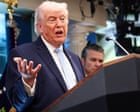
Donald Trump sought to move the national conversation back to immigration on Thursday by posting a graphic and distressing video on Truth Social showing a woman in Florida being killed last week by a man he described as an illegal immigrant from Haiti.
The post came at a time when Trump was facing questions about his war on Iran and his wife’s statement on Jeffrey Epstein. Instead of answering those pressures directly, he used the video to reinforce his broader immigration message and his push for mass deportation.
The footage, which was recorded by a surveillance camera outside a gas station in Fort Myers, showed a man identified by authorities as a Haitian immigrant attacking the woman with a hammer. According to the source material, the woman was reportedly a clerk at the gas station.
Trump’s decision to circulate the video fits a pattern in which he has used shocking imagery to stoke fear around immigration. The post also underscores how he continues to connect violent incidents to his argument for tougher immigration enforcement.
The Florida case has become part of that larger political effort. By highlighting a brutal crime in a highly public way, Trump aimed to steer attention away from other controversies and back toward his immigration agenda.
His post comes amid ongoing debate over how he is using alarming video content to shape public opinion. In this case, the graphic nature of the footage and the setting of the killing outside a busy gas station added to the sense of shock around the message he was trying to send.
Trump’s immigration messaging has frequently relied on vivid, emotionally charged examples, and the Florida video is another instance of that approach. The source describes it as part of his broader effort to justify mass deportation by emphasizing fear and violence tied to immigration.
Authorities identified the suspect as a Haitian immigrant, while Trump described him as an illegal immigrant from Haiti. The woman was killed last week, according to the report, and the surveillance video captured the attack outside the Fort Myers gas station.
As a result, the post became more than just a reaction to a crime report. It also served as a political move, helping Trump redirect attention at a moment when other issues were pressing in on his administration and his public image.
The video’s circulation on Truth Social is likely to intensify discussion over the use of graphic material in political messaging, especially when tied to immigration policy. For Trump, it was another opportunity to present immigration as a public safety crisis and to reinforce his hardline approach.

