
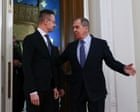
The European Commission has demanded an urgent explanation from Hungary after a leaked phone call between foreign minister Péter Szijjártó and his Russian counterpart, Sergei Lavrov, reignited concerns about Budapest’s relationship with the Kremlin.
In the recording, Szijjártó appeared to offer Lavrov to forward an internal EU document related to Ukraine’s plans to join the European Union. The allegation has prompted fresh criticism in Brussels, where officials described the reported exchange as highly troubling.
A European Commission spokesperson said the claims suggested “the alarming possibility of a member state’s government coordinating with Russia, thus actively working against the security and the interests of the EU and all its citizens.”
The spokesperson added that the matter was “extremely concerning” and said it was now for the Hungarian government “to explain itself as a matter of urgency.” Commission president Ursula von der Leyen will also raise the issue at leaders’ level.
The latest leak has added to longstanding unease in the EU over Hungary’s dealings with Moscow. The reported call has intensified scrutiny of how a member state might be handling sensitive internal EU material while maintaining direct contact with Russian officials.
The Commission’s response makes clear that the issue is being treated as more than a diplomatic embarrassment. For Brussels, the central concern is whether a government inside the bloc may have been willing to share information in a way that could undermine the EU’s own position and its support for Ukraine.
With the European Commission now pressing for answers, the focus has shifted to Budapest and to how Hungary will address the allegations. The request for an urgent explanation signals that the matter is likely to remain on the EU agenda, particularly given the political sensitivity surrounding Ukraine’s accession path and the bloc’s broader response to Russia.

