
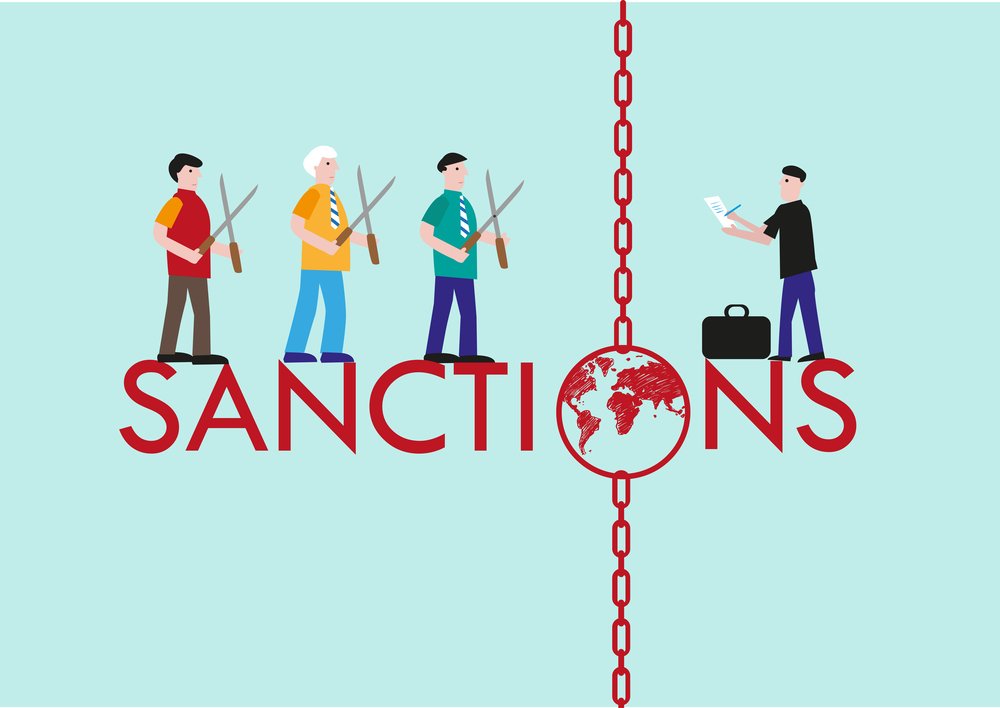
Sanctions are government restrictions used to influence behavior by limiting access to money, trade, travel, or services. In practice, sanctions are not one single tool. They are a menu of measures that can target a country, a specific industry, or named individuals and companies. Some sanctions block assets, some ban certain exports, and others limit shipping, insurance, banking, or technology transfers. The purpose and framing can differ by jurisdiction. For example, the European Union describes its restrictive measures as preventive steps intended to change behavior rather than punish, and they are adopted as part of its foreign and security policy process. At the international level, the United Nations Security Council can impose sanctions under its authority, and then member states are responsible for implementing them through national laws and enforcement systems. Because sanctions can affect banking and supply chains across borders, their real power often comes from how widely they are adopted and how consistently they are enforced, especially in major financial centers. Sanctions can also include exemptions or authorizations for humanitarian activity, which is why you often see references to licenses, derogations, or committee approved exemptions.
How sanctions work in practice
Most sanctions fall into a few common categories. Financial sanctions can freeze assets and prohibit transactions with designated individuals, companies, or institutions. Trade sanctions can ban exports or imports of specified goods, restrict sensitive technologies, or block services such as insurance, shipping support, or financing. Travel measures can impose visa bans or travel restrictions on named individuals. Modern sanctions programs often combine these tools, and they may be sector based, meaning they restrict certain types of activity in specific parts of an economy rather than banning all trade with a country. In the United States, the Office of Foreign Assets Control explains that sanctions can range from blocking the property of specific individuals and entities to broader prohibitions involving an entire country or region, including embargo like measures. These restrictions are typically implemented through regulations and lists of designated parties, which banks and companies screen against. If a company is listed, many transactions that touch it become illegal for people and businesses under that jurisdiction, and in many cases, transactions routed through that jurisdiction’s financial system can also be captured. That is one reason sanctions compliance has become a standard part of bank controls, trade compliance, and corporate risk management. Sanctions can include general licenses or authorizations for certain activities, and humanitarian or public interest exemptions are sometimes built into the regime or granted case by case, which matters because sanctions can otherwise disrupt legitimate aid and essential services.
Who enforces sanctions
Enforcement is not a single global police force. It is a network of national authorities and regulators, plus customs agencies, financial intelligence units, prosecutors, and in some cases courts. At the UN level, Security Council sanctions regimes are typically administered through sanctions committees and supported by monitoring groups or panels that track implementation and report on evasion patterns, but implementation still depends on member states adopting and enforcing rules domestically. In the EU, restrictive measures can be implemented either to give effect to UN decisions or on an autonomous basis, and enforcement is largely carried out by EU member states through their national competent authorities and legal systems. In the UK, the Office of Financial Sanctions Implementation has authority related to financial sanctions enforcement and can impose monetary penalties under its framework, supported by published guidance on how penalties and enforcement decisions are handled. Enforcement activity is not theoretical. Public cases, including monetary penalties for breaches, show how compliance can fail in routine banking processes, especially where screening, name matching, or controls are weak. In the US, sanctions enforcement includes administrative and civil tools, and official enforcement pages and guidance show a structured approach to penalties and compliance expectations.
What sanctions compliance looks like day to day
For businesses, sanctions compliance often starts with screening and risk assessment. Banks, insurers, exporters, shipping firms, marketplaces, and technology platforms typically check customers, counterparties, vessels, and ownership structures against sanctions lists, and they apply controls to prevent prohibited activity. The practical difficulty is that sanctioned parties may use intermediaries, shell companies, changed spellings, or routing through third countries. This is why sanctions programs often evolve to include anti circumvention measures and to target facilitators, such as logistics nodes, financial intermediaries, or services that help move restricted goods or revenue. Recent reporting on EU proposals related to Russia illustrates this direction, including a focus on maritime services and tools intended to curb circumvention through third countries. In addition to lists of designated people and entities, compliance teams often track restricted goods, end use rules, licensing pathways, and sectoral restrictions. They also monitor official updates, because a designation can be added overnight and immediately change whether a transaction is legal. Another important point is that enforcement risk is not only about intentional wrongdoing. Many sanctions frameworks penalize the act of violating restrictions even when the breach was caused by weak controls or poor screening, which is why regulators emphasize documented compliance programs and prompt remediation. Official US guidance and enforcement materials describe expectations for risk based controls, which is why large organizations invest in sanctions screening tools, staff training, and escalation processes.
What changes over time and why it matters
Sanctions evolve because the underlying political and security conditions evolve, and because enforcement authorities learn how targets are adapting. A sanctions regime may start narrow and later expand from named individuals to sectors, services, or broader restrictions, especially if policymakers conclude the initial measures did not change behavior. Lists of designated people and entities can also grow as investigators identify networks that enable sanctioned activity. Meanwhile, sanctions can be modified to reduce unintended harm, such as creating clearer humanitarian carve outs, issuing licenses for specific transactions, or approving exemptions for aid operations, which can happen through committee processes and administrative decisions. Sanctions also change because of coordination among allies. When multiple jurisdictions align their measures, the impact can increase, but coordination also requires legal and political agreement, which can shape timing and scope. In the EU, for example, adopting packages requires consensus among member states, which can affect how quickly measures move from proposal to binding rules. Finally, sanctions can shift in response to enforcement realities. If authorities see evasion through particular routes, they may target those routes, such as shipping services, finance channels, or re export pathways. These changes matter for readers and businesses because sanctions are not static. A compliance decision that was correct last month can become wrong today, and a story that initially focuses on high level politics can later become a story about logistics, finance, energy flows, or legal enforcement.
What happens next
If you are publishing this as an evergreen news style explainer, the most effective maintenance approach is to treat it as a living guide with a periodic review. Update sections when major jurisdictions revise enforcement guidance, when new UN regimes are created or ended, and when major sanctions packages introduce new categories of restrictions or new anti circumvention tools. Add a visible “last updated” timestamp and keep a short update note explaining what changed. That protects credibility, helps readers understand freshness, and strengthens long term search performance.
FAQ
Are sanctions the same as trade embargoes?
Not always. An embargo is typically a broad trade ban. Many sanctions programs are narrower, targeting specific people, sectors, goods, or services.
Who must follow sanctions rules?
Usually people and companies under the jurisdiction issuing the sanctions, plus any activity routed through their financial systems or involving their nationals in certain contexts. The exact scope depends on the legal framework.
How are sanctions enforced?
Through national authorities: regulators, customs agencies, prosecutors, and courts. Some bodies can impose civil monetary penalties, and enforcement often relies on audits, reporting, investigations, and compliance failures.
Can humanitarian aid be allowed under sanctions?
Yes. Many regimes include exemptions or licensing pathways, and UN committees can approve exemptions for humanitarian projects under certain regimes.
Do sanctions always work?
Results vary by goal, design, coordination, and enforcement. This explainer focuses on how sanctions operate and change, not on claiming guaranteed outcomes.
Source note / verification note
This explainer relies on official institutional documentation and guidance for UN, US, EU, and UK sanctions structures and enforcement, plus recent reporting for examples of how sanctions packages can evolve.

