
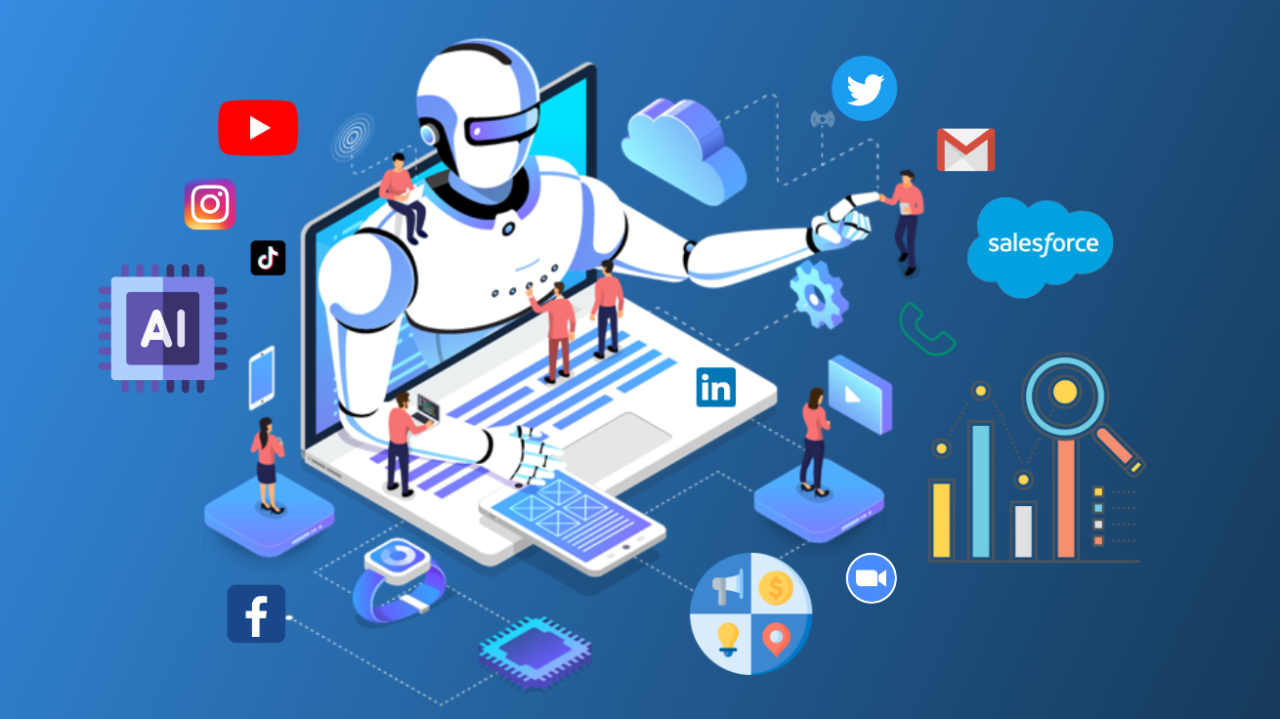
AI is no longer a “nice-to-have” in marketing. It’s becoming the operating layer behind targeting, creative production, campaign optimization, and measurement. The impact is not just faster content—it’s a shift in how marketing decisions get made: more automation, more real-time personalization, and more pressure on marketers to manage systems instead of doing everything manually.
Below is a practical breakdown of the biggest changes, with real-world examples and a simple plan to adopt AI without losing brand control.
1) AI is reshaping paid media from “manual optimization” to “automation-led performance”
The biggest visible impact is in advertising platforms. AI-driven campaign types and features are increasingly designed to optimize across placements, audiences, and creative variations with less manual configuration.
-
Google continues expanding generative features inside Google Ads and Merchant Center—such as tools that generate or recommend assets and creative variations to scale product visuals.
-
Google has also updated how automatically created assets evolve inside Search campaigns (moving into settings like “text customization”), reflecting deeper AI involvement in ad copy adaptation.
Real-world example:
A small e-commerce brand used to run separate Search, Display, and YouTube campaigns with different creatives. With AI-led campaign automation, they can test more combinations faster—then focus human effort on the offer, product positioning, and landing page conversion.
What this changes for marketers:
-
Less time tweaking bids and micro-targeting
-
More time needed for creative strategy, data quality, and conversion funnels
-
A bigger need to monitor brand safety and “AI-generated” copy accuracy
2) Creative production is accelerating—while brand consistency becomes the bottleneck
AI can generate variations of ad copy, product images, and short-form scripts quickly. But the real competitive advantage is not “more content.” It’s better creative direction: clearer briefs, tighter brand voice rules, and faster iteration based on performance signals.
Meta Platforms has been explicit that AI improvements are driving advertising performance and efficiency across its platforms, and its Advantage+ automation is designed to increase eligible ad candidates while automating audience creation, budgeting, placements, and creative generation.
Real-world example:
Instead of producing 5 ad creatives per month, a team produces 5 strong “creative directions” (angles + hooks + proof) and uses AI to generate 50 variations—then humans pick winners and refine.
The new skill: Creative governance
-
Define what must stay consistent (tone, claims, visual identity)
-
Allow flexibility where testing helps (headlines, hooks, thumbnails, CTA phrasing)
3) Personalization is moving from segmentation to “dynamic messaging”
Traditional marketing personalization was “segment-based”: by country, device, persona, or lifecycle stage. AI is pushing toward dynamic personalization, where messaging adapts to intent signals and micro-context.
This can improve relevance—but also increases the risk of inconsistent messaging if guardrails are weak.
What to do:
-
Create “approved message blocks” AI can combine safely
-
Define disallowed claims (pricing promises, medical/financial guarantees, competitor statements)
4) Measurement and insights are getting faster—but hallucinations and false certainty are real risks
AI can summarize analytics, detect anomalies, and suggest hypotheses faster than humans—especially when dashboards are complex. But AI tools can also sound confident while being wrong.
Real-world example:
An AI assistant says, “Conversions dropped because CPC increased.”
In reality, the problem is the checkout page failing on mobile Safari.
Best practice: Use AI for:
-
summarizing performance
-
generating hypotheses
-
suggesting tests
…but verify using your analytics source of truth and QA checks.
5) AI is changing marketing org design: less production work, more strategy and systems
A major shift is where time goes:
-
Less time: drafting endless variants, manual reporting, repetitive optimization
-
More time: strategy, positioning, audience research, offer design, lifecycle automation, experimentation
McKinsey has estimated large productivity and value potential from generative AI in sales and marketing, including meaningful upside in marketing and customer interactions.
Practical implication:
Your team’s value increasingly comes from judgment—not output volume.
6) The risks: brand, compliance, trust, and over-automation
AI can amplify mistakes at scale. The top risks marketers should manage:
-
Brand dilution: too many variations, inconsistent voice
-
Compliance/legal: unsupported claims, regulated industries, missing disclosures
-
Data privacy: sending sensitive customer data into unapproved tools
-
Creative sameness: everyone using the same templates and “AI tone”
-
Over-automation: relying on platform AI without monitoring conversion quality and LTV
How to adopt AI in marketing without losing control (a simple 30-day plan)
Week 1: Pick one workflow
Examples: ad copy variation, weekly reporting summaries, customer email drafts, SEO outlines.
Week 2: Create guardrails
-
Brand voice rules (do/don’t)
-
Claim rules (what can/can’t be said)
-
Output format templates (so results are consistent)
Week 3: Run controlled tests
A/B test AI-assisted creative vs human baseline. Measure:
-
CTR and CVR (short-term)
-
CPA and lead quality (mid-term)
-
Retention/LTV signals (where possible)
Week 4: Turn wins into a system
Document prompts, examples, and a review checklist so the team repeats success.
Bottom line
The impact of AI on marketing isn’t just efficiency. It changes the role of the marketer: from creator-of-every-asset to designer of messaging systems—with stronger emphasis on strategy, quality control, and experimentation.

